
Japanese Chef Knife Types Explained
A dull, heavy knife makes simple prep feel like work. The appeal of Japanese chef knives is not just tradition - it is how clearly each blade is shaped around a job, a cutting style, and the kind of cook using it. Once you understand the main formats, choosing a Japanese knife becomes much less intimidating and much more exciting.
Why Japanese chef knives feel different
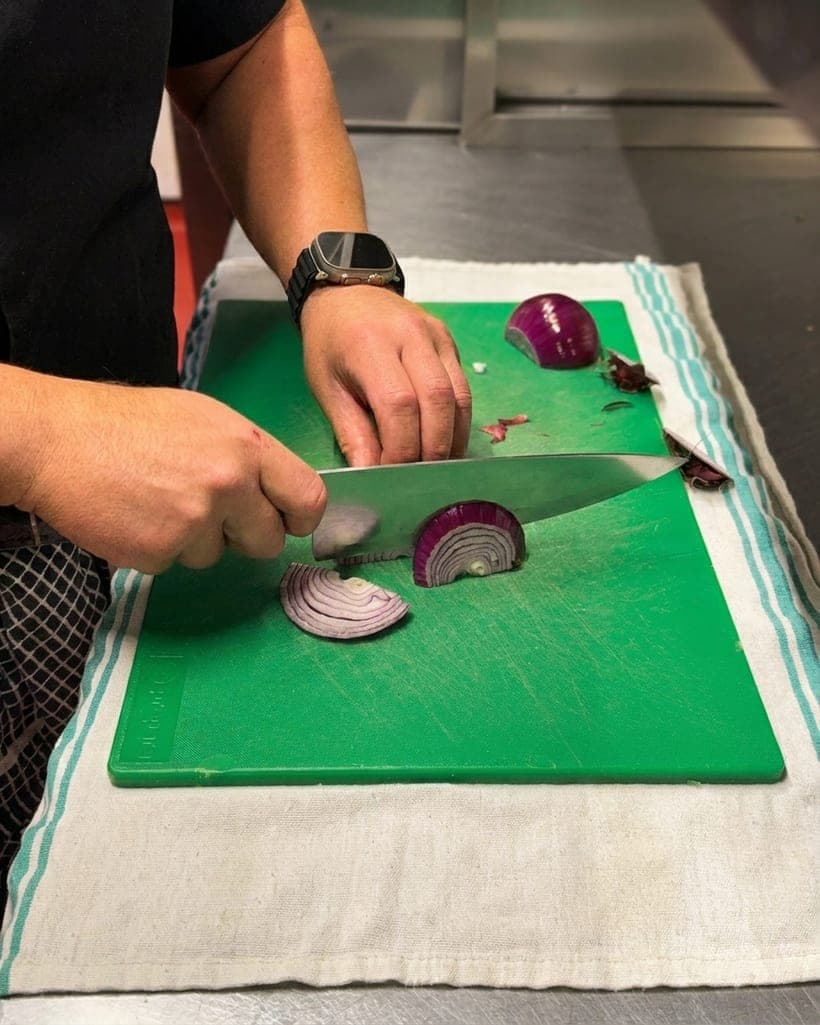
Most home cooks notice the difference before they can explain it. Japanese-style knives often feel lighter, more agile, and more precise than standard Western chef’s knives. That changes the rhythm of prep. Onion slices come out cleaner. Herbs bruise less. Proteins portion with less tearing.
Part of that comes from geometry. Many Japanese knives are thinner behind the edge, which helps them move through food with less resistance. Part comes from steel, which is often hardened to hold a sharper edge for longer. But shape matters just as much. Different Japanese chef knives are designed to suit different ingredients and different habits at the cutting board.
If you mostly chop vegetables, the best knife for you may not be the same one a home cook wants for breaking down chicken, mincing shallots, and slicing roast pork on a Sunday. That is why format comes first.
The main Japanese chef knives
Gyuto
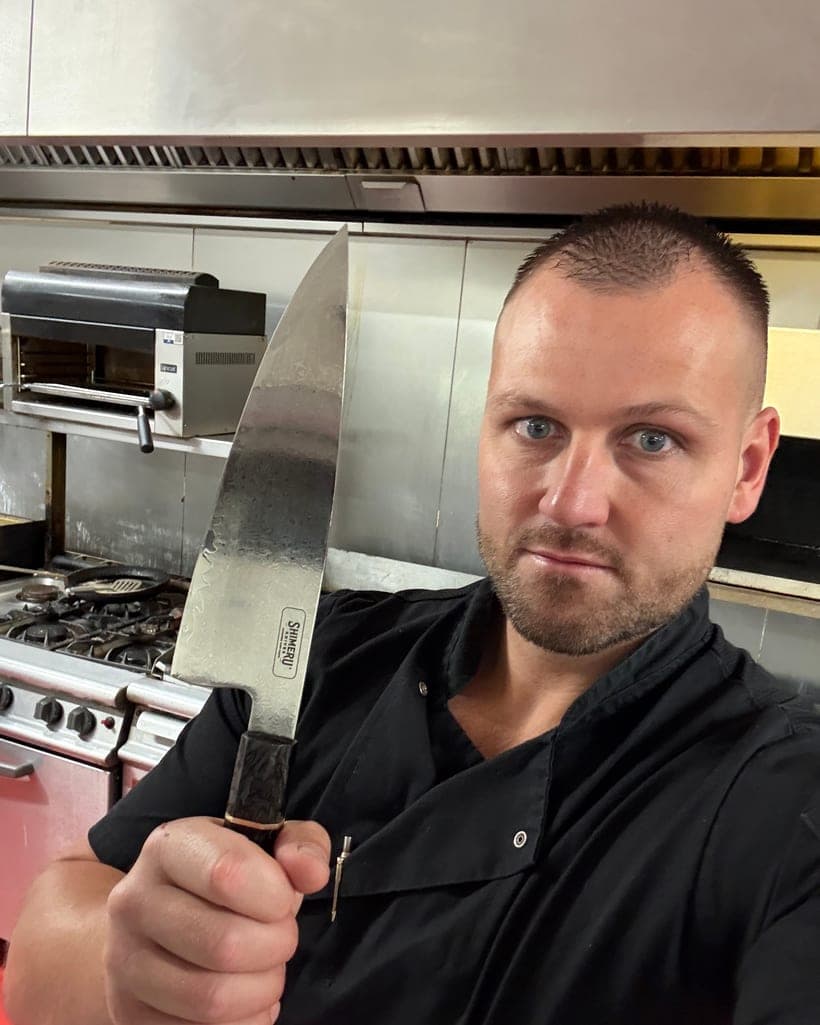
If there is one Japanese knife that feels like the most natural upgrade from a Western chef’s knife, it is the Gyuto. This is the all-purpose workhorse. It usually has a pointed tip, a gently curved edge, and enough length to handle everything from herbs and onions to proteins and larger vegetables.
For most home cooks, a Gyuto is the safest first choice because it is so versatile. It suits rocking cuts better than flatter Japanese profiles, but still offers the lighter feel and cleaner cutting performance people want from Japanese steel. If you cook a wide range of meals and want one knife that can do almost everything well, this is often the answer.
The trade-off is that it is a generalist. It will not be quite as efficient on vegetables as a Nakiri or quite as compact and easygoing as a Santoku in a smaller kitchen.
Santoku
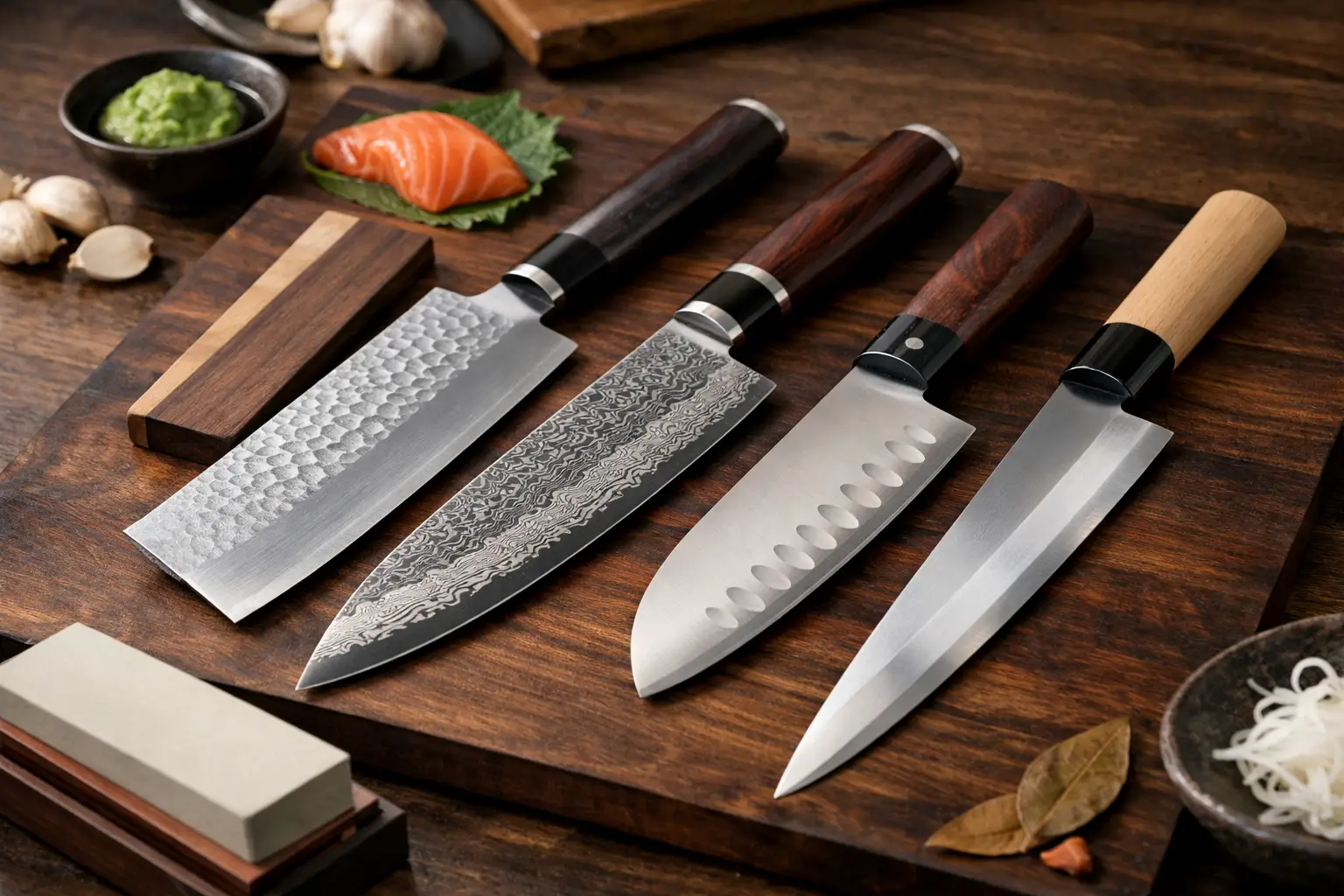
Santoku means “three virtues,” often understood as meat, fish, and vegetables. In practical terms, it is a compact all-rounder that many home cooks love because it feels immediately manageable. The blade is usually shorter than a Gyuto, with a flatter edge and a sheep’s foot-style tip.
That flatter profile suits straight up-and-down chopping and push cutting very well. If your prep style is more slice and chop than rock and mince, a Santoku can feel intuitive from day one. It is especially good for cooks who want control, lighter weight, and less bulk on the board.
Compared with a Gyuto, a Santoku gives up some tip precision and some reach. If you regularly cut large melons, big heads of cabbage, or large roasts, the shorter blade can feel limiting. For everyday dinners, though, it is one of the easiest formats to live with.
Nakiri
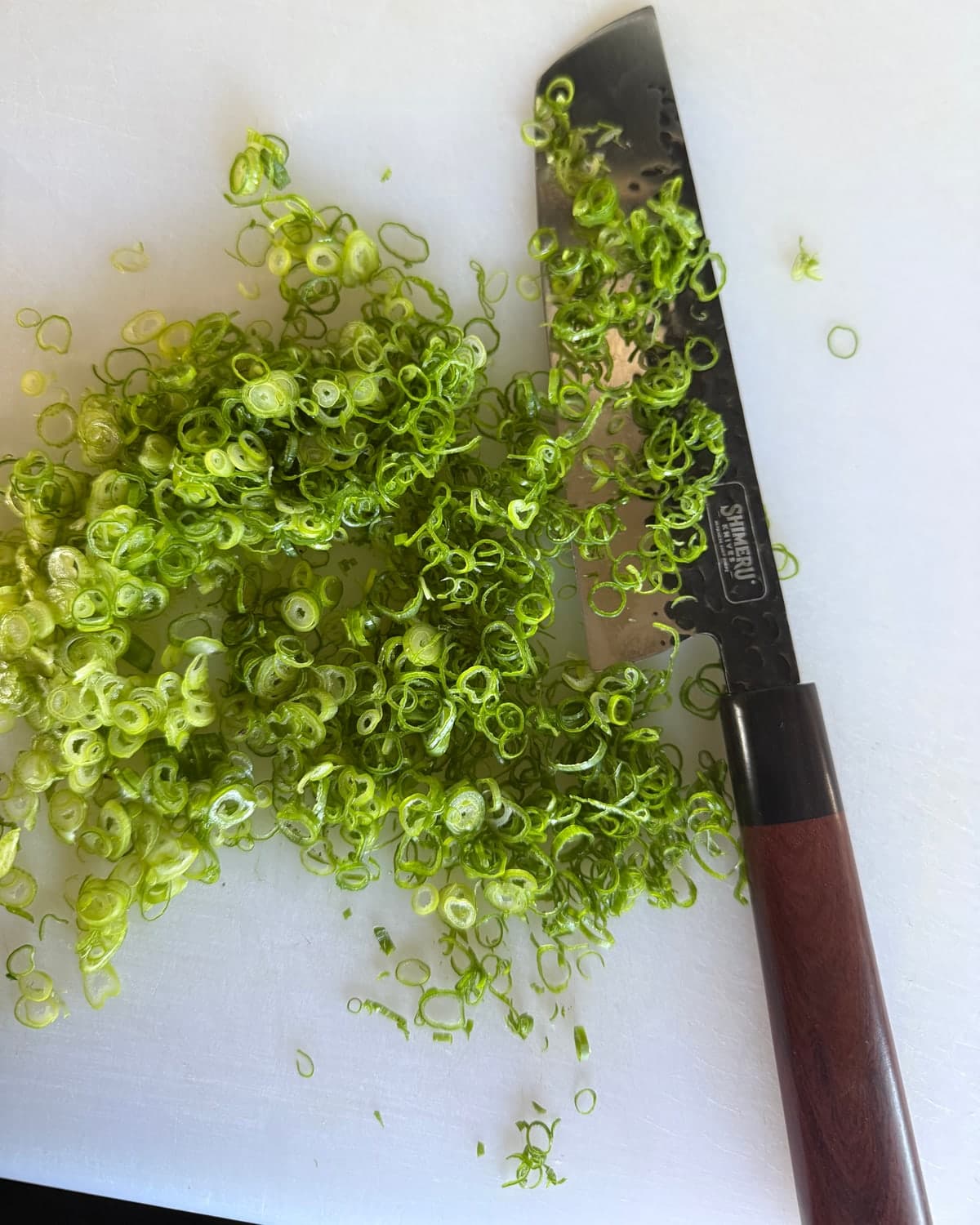
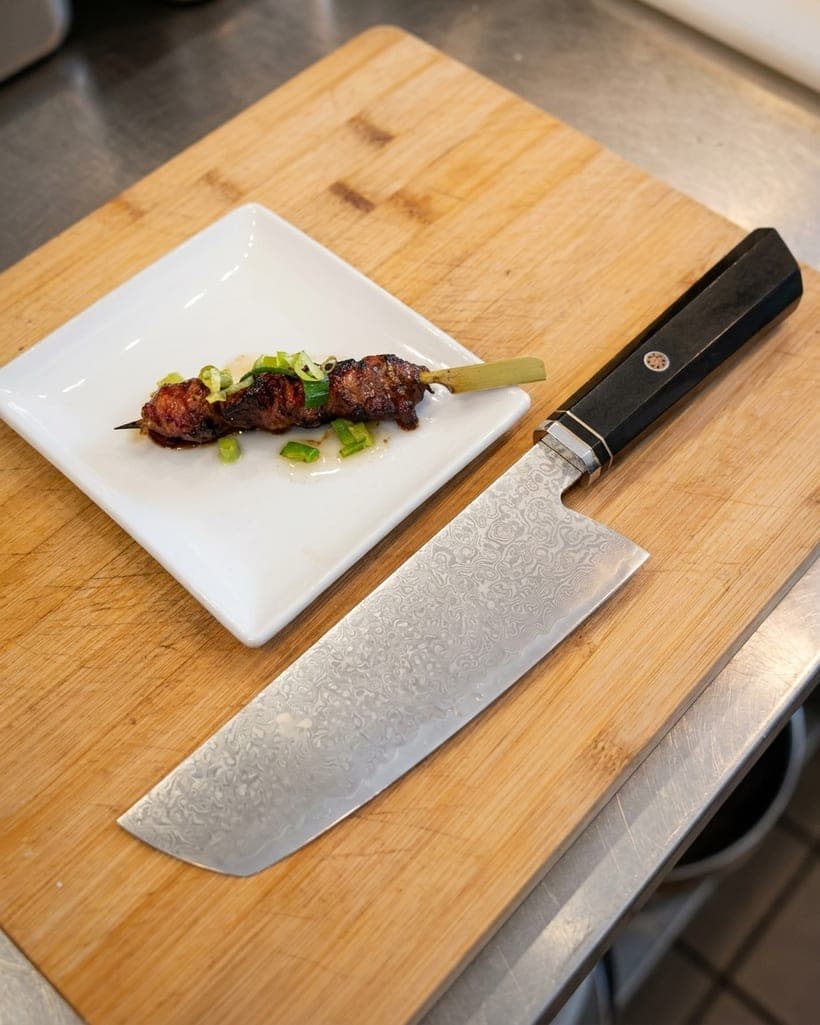
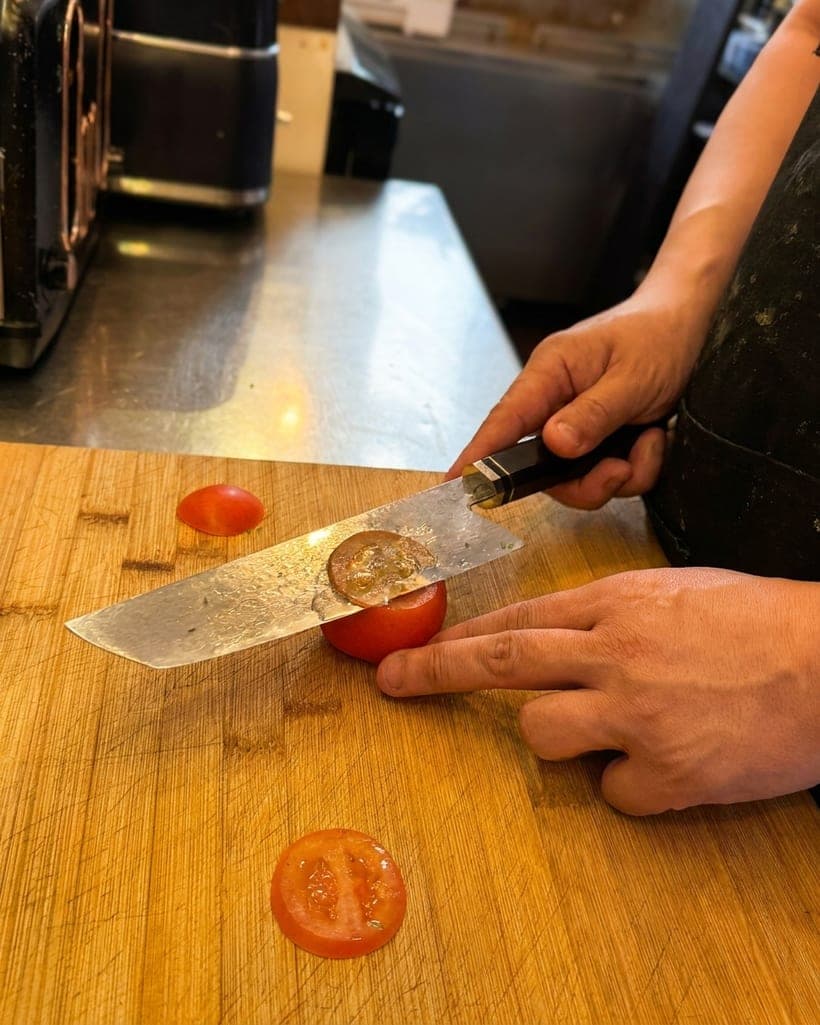
The Nakiri is a vegetable specialist, and it looks the part. It has a rectangular blade, a flat edge, and no pointed tip. This shape is excellent for fast, clean vegetable prep because more of the edge meets the board at once.
If your cooking leans heavily toward produce - salads, stir-fries, soups, meal prep, plant-forward dinners - a Nakiri can be deeply satisfying to use. It excels at slicing cucumbers, dicing onions, shredding cabbage, and turning a pile of vegetables into neat, even pieces with very little effort.
Its limitation is obvious: without a pointed tip, it is less flexible for detailed tasks. It can absolutely handle many kitchen jobs, but it is not the knife most people choose if they want one blade for everything.
Bunka
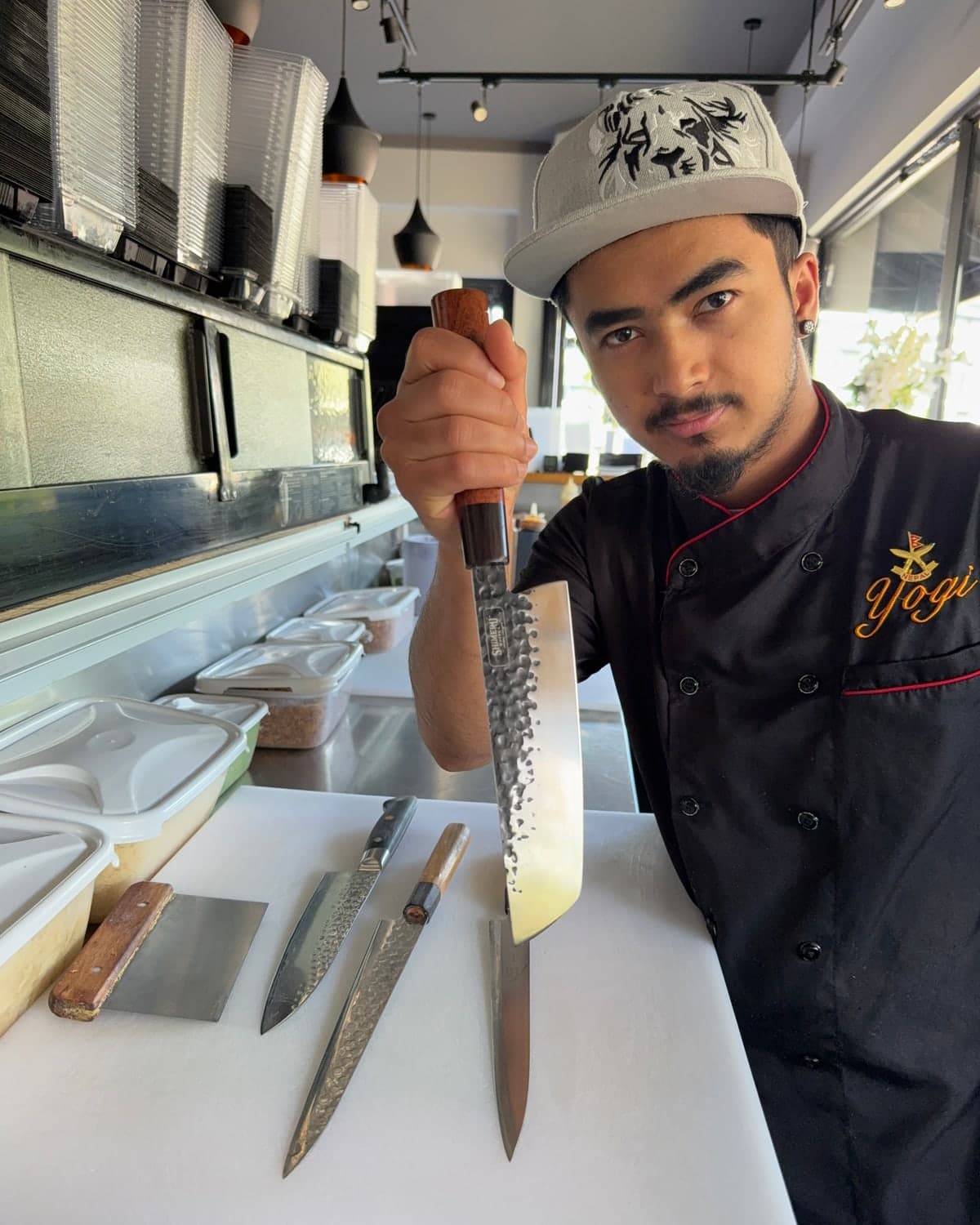
The Bunka is where utility meets attitude. It is a general-purpose knife with a flat-ish profile like a Santoku, but with a more aggressive reverse tanto tip. That pointed tip gives it better precision for finer work while keeping the compact, nimble feel many home cooks prefer.
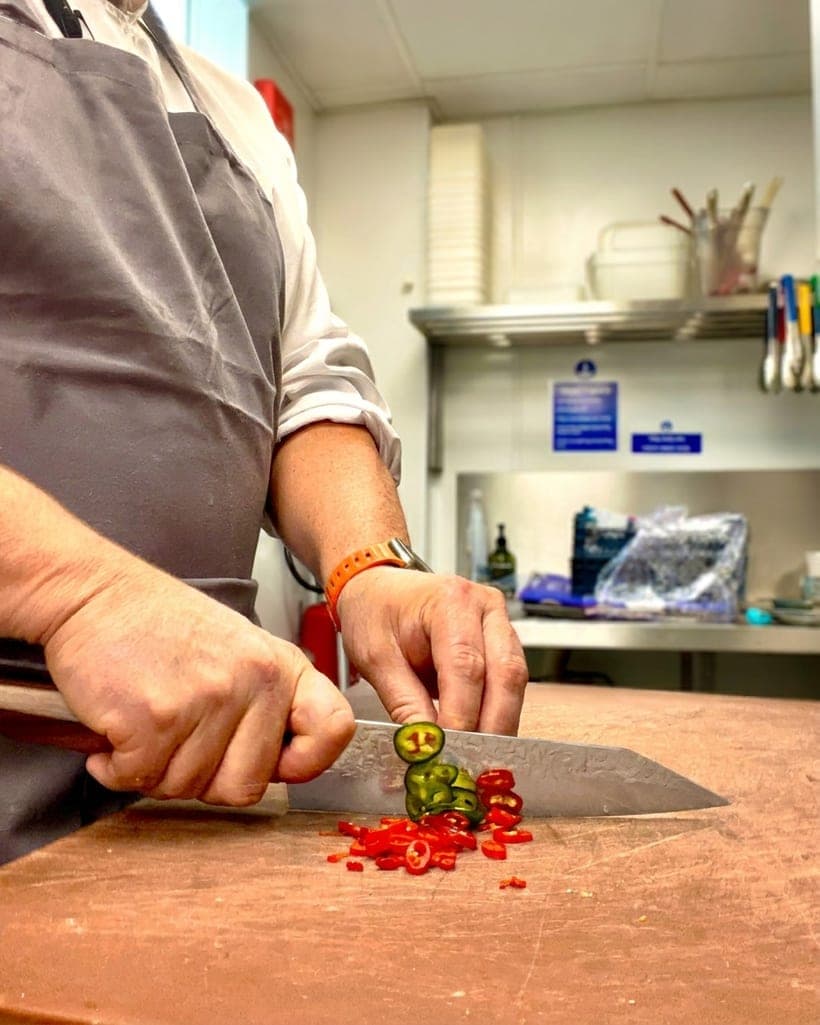
A Bunka is a smart choice if you like the idea of a Santoku but want a little more edge in both appearance and function. It handles vegetables beautifully, still works as an everyday all-rounder, and offers better tip control for shallots, garlic, trimming, and detail work.
It is slightly more style-conscious as a choice, but not in a precious way. It is practical first, distinctive second.
Kiritsuke
Kiritsuke is one of the most talked-about Japanese knife shapes, partly because it looks so sharp and refined. Traditionally, the Kiritsuke had a more specialised place in Japanese kitchens, but modern versions made for home cooks are often designed as versatile multi-purpose knives.
The standout feature is the angled tip, which gives the knife a sleek profile and useful precision. Many Kiritsuke-style blades have a flatter edge, making them strong performers for push cuts and slicing. They can feel incredibly precise in skilled hands.
For a confident home cook, a Kiritsuke can be an excellent all-purpose knife. For a beginner, though, it may not be the easiest first step. The profile tends to reward more deliberate technique, and the appeal is often as much about feel and preference as pure practicality.
Bread knife
Not every high-performing kitchen knife needs a razor-thin straight edge. A good bread knife matters because crusty loaves, soft sandwich bread, ripe tomatoes, and delicate cakes all ask for a different kind of cut. Serrations grip where a plain edge might slide or crush.
This is not the knife you use all day, but when you need it, nothing else substitutes well. For many kitchens, pairing a Gyuto or Santoku with a bread knife covers the majority of real-life prep.
Cleaver
The word cleaver can mean different things, so this is where context matters. A heavy Western-style meat cleaver is built for chopping through bone, while many Asian and Japanese-inspired vegetable cleavers are thinner and designed more for slicing and scooping than brute force.
For home cooks, a thinner cleaver-style knife can be excellent for high-volume vegetable prep and broad blade utility. It gives you lots of surface area for transfer from board to pan. A heavy bone-chopping cleaver, on the other hand, is a niche tool for most kitchens.
How to choose between Japanese chef knives
The best choice depends less on what looks impressive and more on what you cook three or four nights a week. If you want one primary knife and cook a little of everything, start with a Gyuto. If you want something slightly smaller and more approachable, choose a Santoku. If vegetables dominate your board, a Nakiri earns its place quickly.
If you already know you value tip work and a sharper-looking profile, a Bunka or Kiritsuke may suit you better. Those knives often appeal to cooks who want everyday utility with a bit more personality.
Size matters too. A longer knife gives you reach and slicing power, but it can feel less friendly in a small apartment kitchen. A shorter blade is easier to control and easier to store, though it may feel less capable with larger ingredients.
What home cooks often get wrong
Many people assume the “best” knife is the most specialised, the most expensive, or the most traditional. Usually, it is the knife you will actually enjoy using daily. A beautifully made Nakiri is not automatically the right first purchase if you also break down proteins and want one knife to handle everything.
It is also easy to overfocus on steel and ignore profile. Edge retention matters, but blade shape changes your experience immediately. A knife can be made from excellent steel and still feel wrong for your cutting style.
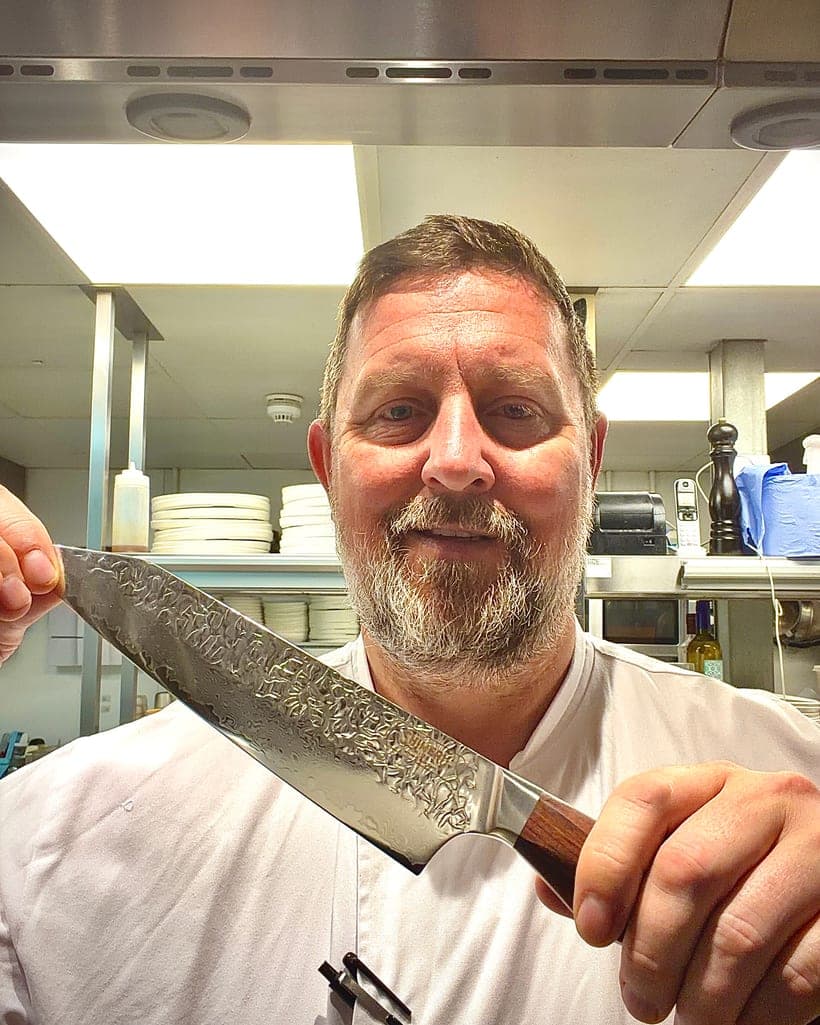
That is why approachable guidance matters. Brands like Shimeru Knives have helped make Japanese knife design easier to understand for everyday cooks, which is exactly what this category needs. Better tools should feel exciting, not exclusionary.
A simple way to build your setup
For most homes, the strongest setup is not a giant block full of compromises. It is one excellent primary knife and one or two supporting pieces that solve specific problems. A Gyuto plus a bread knife is a practical pairing. A Santoku plus a petty knife works beautifully for smaller kitchens. A Nakiri becomes compelling once you know vegetables are the centre of your cooking.
That approach keeps the experience premium but grounded in real use. You do not need to become a collector to feel the difference a well-chosen Japanese knife makes.
The right blade should make dinner prep feel smoother, faster, and more satisfying. Once you understand the types, the choice becomes less about jargon and more about finding the knife that fits your hand, your habits, and the way you want your kitchen to feel.