











How to Look After Damascus Knives
A Damascus knife feels different from the moment you take it out of the box. The layered pattern catches the light, the edge feels noticeably sharper than a standard supermarket blade, and prep suddenly feels cleaner and more precise. That is exactly why learning how to care for damascus knives matters early - not because they are fragile, but because a well-made blade performs best when you treat it with a little intention.
For most home cooks, the good news is simple. Damascus care is not complicated. You do not need a collector's toolkit or a professional kitchen routine. You need a few consistent habits that protect the edge, preserve the finish, and keep the knife feeling as good in six months as it did on day one.
What Damascus steel needs from you
The first thing to understand is that Damascus refers to the layered look of the blade, not magic immunity to wear. Many modern Damascus kitchen knives use a hard cutting core with layered outer steel for strength and visual character. That construction gives you a blade that can feel remarkably sharp, light, and precise, but it still responds to moisture, impact, acidic residue, and poor storage.
In practical terms, your knife has two priorities: keep the edge keen and keep the blade clean and dry. If you do those two things well, most of the rest follows naturally.
There is also a small trade-off worth knowing. Harder Japanese-style steels tend to hold a fine edge longer than softer Western knives, but they can be less forgiving if used carelessly. Twisting through hard squash, scraping the board with the edge, or tossing the knife into a drawer may not ruin it immediately, but over time those habits show up as chips, dullness, or cosmetic damage.
How to care for Damascus knives day to day
Daily care is where performance is won or lost. The basic rule is wash by hand, dry right away, and put the knife away properly. That sounds obvious, but most knife damage happens in the ordinary moments between dinner and cleanup.
After use, rinse or wash the blade with warm water, mild dish soap, and a soft sponge. Then dry it completely with a towel before setting it down. Do not leave it in the sink, do not let food residue dry on the blade, and do not air-dry it on a rack. Moisture left sitting on steel is never your friend, especially around the edge.
If you are cutting highly acidic ingredients like lemons, tomatoes, or onions, it helps to wipe the blade during prep if you are working slowly. This matters more with some steels than others, but as a general habit it keeps the finish cleaner and reduces the chance of spotting.
The dishwasher is the one shortcut not worth taking. Heat, detergent, prolonged moisture, and contact with other utensils are all bad for a fine edge. Even if the blade survives a few cycles, the edge and finish usually tell the story later.
The fastest ways to damage a Damascus knife
Most problems come from misuse rather than manufacturing. A Damascus kitchen knife is made for slicing and controlled chopping on appropriate ingredients. It is not meant for frozen food, bones, hard pits, or prying open packaging.
Cutting surface matters too. Use end-grain wood, quality wood, or a softer synthetic board designed for kitchen knives. Glass, marble, granite, and ceramic boards may look sleek on the counter, but they are brutal on sharp edges.
Storage is just as important. Loose drawer storage is one of the quickest ways to pick up scratches and edge damage. A saya, blade guard, magnetic knife strip, or knife block gives the blade a safer resting place. Magnetic strips work especially well if they are smooth, secure, and let you place the spine down gently rather than snapping the edge against the surface.
Cleaning and protecting the finish
One reason people buy Damascus knives is the pattern. It adds a sense of craftsmanship that feels distinct from plain stainless steel. With proper care, that finish stays crisp and attractive. With neglect, it can look cloudy or marked much sooner than expected.
Routine cleaning should stay simple. Avoid abrasive scrubbers, harsh powders, and aggressive polishing pastes unless you know exactly what you are trying to correct. They can dull the visual contrast of the pattern or scratch the blade face.
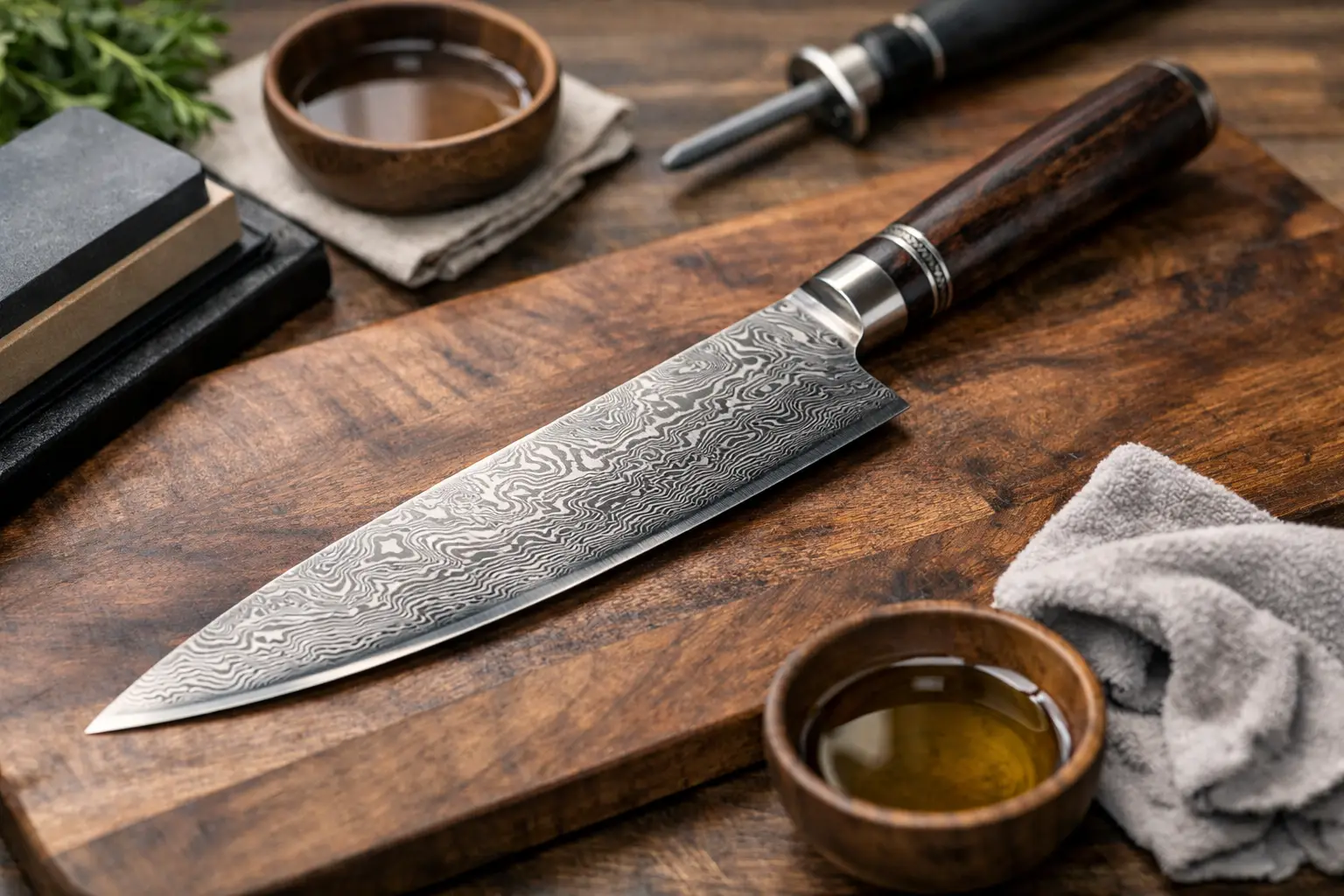
If you notice fingerprints, water spots, or light residue, a gentle wash and thorough dry is usually enough. For longer-term storage, a very light coat of food-safe mineral oil on the blade can help protect the surface, especially in humid kitchens or if the knife will not be used for a while. You do not need to oil it after every single use, just occasionally when conditions call for it.
If your knife has a more reactive steel core rather than a fully stainless construction, that extra caution matters more. Some blades develop character with use. Others are more stain-resistant. It depends on the steel. Either way, dry storage and prompt cleaning are the best insurance.
Sharpening without shortening the life of the knife
A sharp Damascus knife is safer, more precise, and much more enjoyable to use. The mistake many home cooks make is waiting until the knife feels completely dull, then attacking it with the wrong tool.
For most Japanese-style blades, whetstones are the right choice. They remove steel in a controlled way and let you maintain the fine edge geometry the knife was designed for. Pull-through sharpeners are convenient, but many are too aggressive or poorly matched to harder steels and narrower edge angles. They can create a rougher edge and take off more material than necessary.
How often should you sharpen? It depends on how much you cook, what you cut, and how well you treat the edge between sessions. A frequently used home knife might need true sharpening every few months, while a lightly used one can go longer. Honing is a separate question. Traditional honing rods are common with softer Western knives, but harder Japanese blades do not always benefit from the same treatment. If you use a rod at all, choose one suitable for hard steel and use a light touch.
If sharpening feels intimidating, that is normal. A good local professional who understands Japanese knives is a better option than a generic service that treats every blade the same. The goal is not just sharpness, but preserving the knife's profile and balance over time.
Signs your knife needs attention
You do not need to wait for obvious failure. A knife usually tells you when care is slipping. Tomatoes start crushing before the skin breaks. Herbs bruise instead of slicing cleanly. Onions require more pressure. The blade shows faint spotting, or the edge no longer feels smooth through prep.
These small changes are useful. They mean it is time to clean up your routine, not panic. A proper wash, better drying habits, safer storage, or a fresh edge often restores the experience quickly.
How to care for Damascus knives for the long haul
Long-term care is really about consistency. Respect the edge, keep the blade dry, store it properly, and sharpen it correctly. That is what keeps a premium knife performing like one.
For home cooks upgrading into Japanese-style cutlery, this is part of the appeal. A better knife asks a little more of you, but it gives more back every time you cook - cleaner cuts, less effort, and a stronger sense of control on the board. That is why brands like Shimeru focus so much on making craftsmanship accessible. The knife should feel exceptional in use, not intimidating in ownership.
If you treat your Damascus knife like a precision kitchen tool rather than a disposable utensil, it will reward you daily. Not with ceremony, just with better cooking.