
How Are Japanese Chef Knives Made?
A good Japanese knife feels different before it even touches the board. It looks cleaner, moves faster, and seems to glide where heavier Western knives tend to push. If you have ever wondered how Japanese chef knives are made, the short answer is that every step is designed around one goal - creating a blade that cuts with less resistance and more control.
That result does not come from marketing language or surface details alone. It comes from steel choice, forging method, heat treatment, blade geometry, and finishing. Put simply, a Japanese chef knife is made by stacking many small decisions that all affect sharpness, balance, edge retention, and feel in the hand.
How are Japanese chef knives made from raw steel?
Everything starts with steel. This is where the knife's personality begins.
Many Japanese chef knives use hard, fine-grained steels that can take a very acute edge. That includes stainless options such as VG-10 and SG2, along with carbon steels like White Steel and Blue Steel. Stainless is easier to live with because it resists rust and staining. Carbon steel is prized for edge feel and ease of sharpening, but it needs more care. Neither is automatically better. It depends on how you cook, how often you sharpen, and how much maintenance you want in daily life.
The steel may be used as a single material or as a core wrapped in softer outer layers. In many Japanese knives, a hard cutting core is clad with softer steel. This gives you the cutting benefits of a hard edge without making the whole blade overly brittle. It is one reason Japanese knives can feel precise without feeling fragile when made well.
Once the steel is selected, the maker cuts or prepares it for shaping. In some workshops, the process is highly traditional. In others, modern machinery helps with consistency. The best modern knives often combine both - skilled human finishing supported by precise production methods.
Forging, stamping, and why the method matters
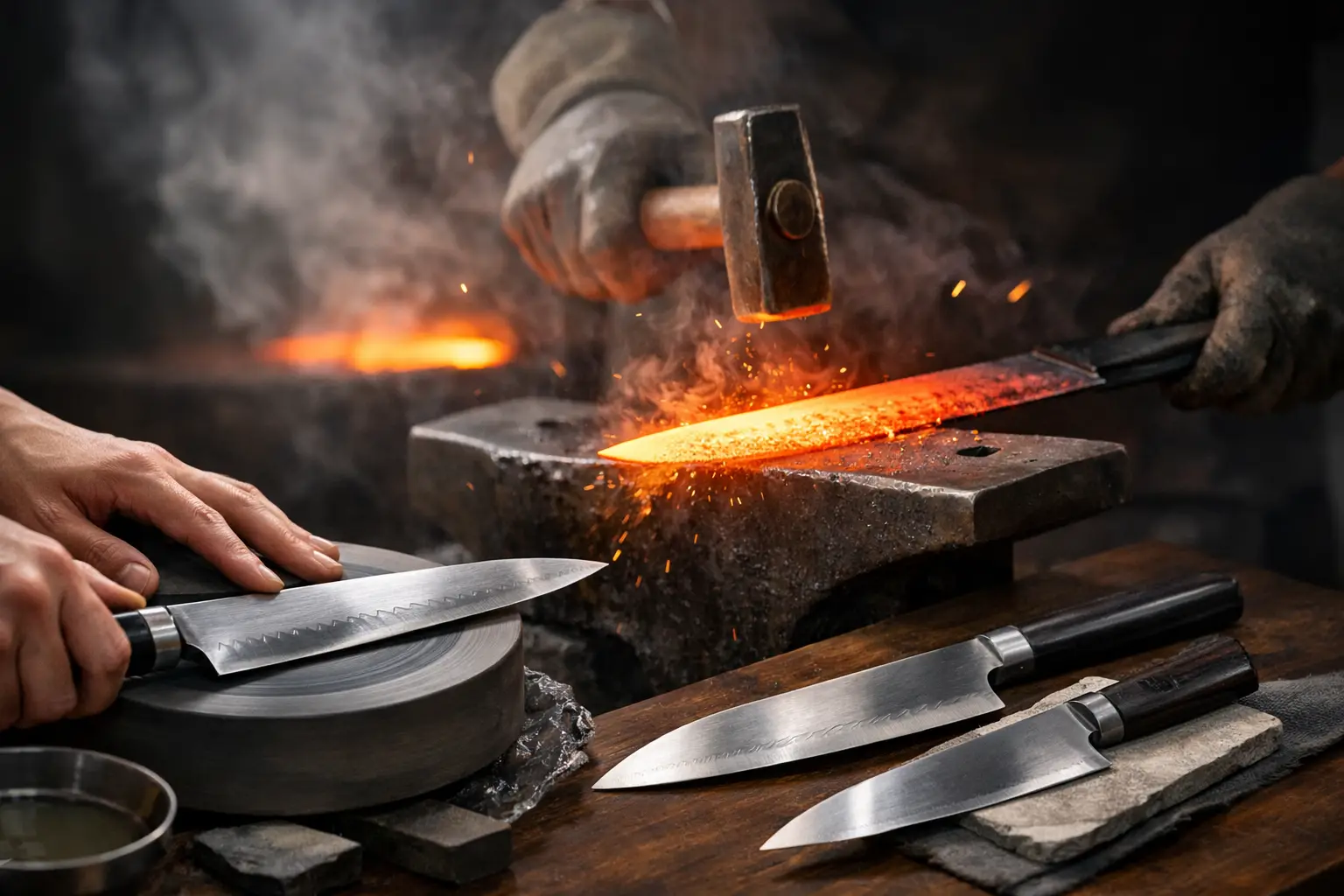
Not every Japanese knife is forged by hand over an open flame, and that is worth saying clearly. Some are hand-forged, some are machine-forged, and some are stamped from sheet steel. All three methods exist in the Japanese knife world.
Hand forging involves heating the steel and hammering it into shape. This can refine the blade profile, taper, and thickness, and it often carries a strong craft story. Machine forging uses powered equipment to achieve similar shaping with more repeatability. Stamped knives are cut from a steel sheet, then ground and finished. When done well, they can still perform beautifully.
For home cooks, the real question is not whether a knife was made in the most romantic way. It is whether the final geometry is right. A thoughtfully made stamped knife can outperform a poorly forged one. What matters on the board is thinness behind the edge, heat treatment quality, and balance.
The heat treatment is where performance is built
If steel choice sets the potential, heat treatment turns that potential into real cutting performance.
After shaping, the blade is heated to a specific temperature and then cooled in a controlled way. This hardens the steel. It is then tempered to reduce brittleness and create a more usable balance of hardness and toughness. This stage is one of the biggest reasons Japanese knives can hold a sharper edge for longer than many mass-market Western knives.
Harder steel allows for a thinner, more acute edge. That is what gives Japanese knives their clean, low-drag feel through onions, herbs, fish, and dense vegetables. But there is a trade-off. Very hard steel can chip if used carelessly on bones, frozen food, or hard surfaces. Precision cuts both ways. You gain cutting efficiency, but you also need better technique and a proper cutting board.
This is where quality matters most. A knife with excellent steel but poor heat treatment will never feel truly refined. A knife with solid steel and excellent heat treatment often feels far better than its spec sheet suggests.
Grinding the blade into its cutting shape
After heat treatment, the blade is ground. This is where a rough steel blank starts becoming a true kitchen knife.
Grinding defines the profile, the taper, and the edge geometry. On a Japanese chef knife, the maker is often aiming for a thinner blade and a finer edge than you would find on a typical Western chef's knife. That thinness is a major part of the experience. It helps the knife pass through food instead of wedging it apart.
This stage also helps define the knife's style. A Gyuto is shaped for versatility and smooth rocking or push cutting. A Santoku is a little shorter and often feels nimble and approachable for everyday prep. A Nakiri is flatter and optimised for vegetables. The blade's final form is not just aesthetic. It changes how the knife moves and what kind of cook will love it.
Some Japanese knives are ground with asymmetry for specialised cutting feel. Others are more evenly ground for broader appeal. For most home cooks, an even or gently asymmetric double-bevel edge is the sweet spot. It gives you Japanese-style sharpness without requiring specialist technique.
Adding cladding, Damascus, and finish
This is the point where many buyers notice the visual details, but they are not all purely decorative.
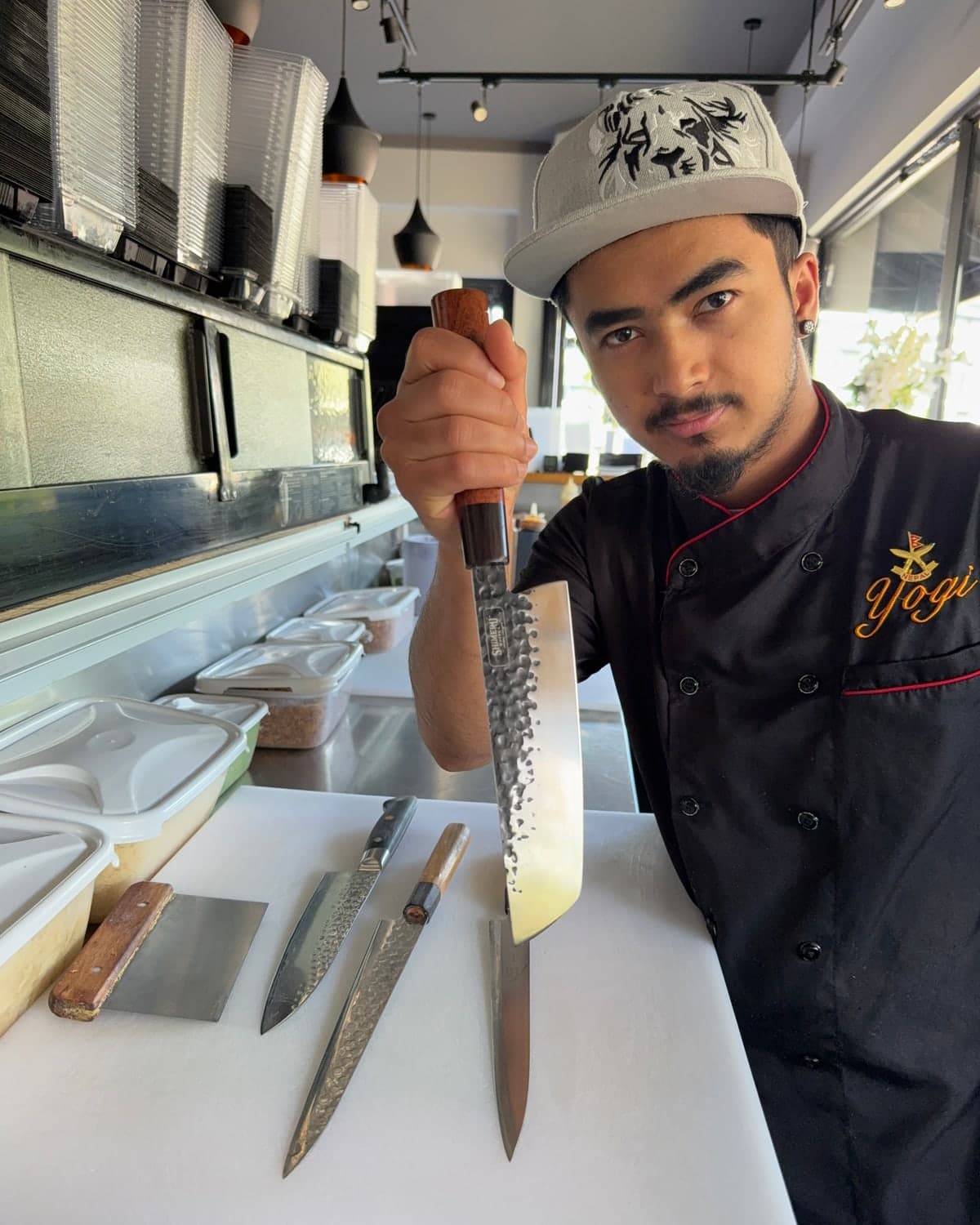
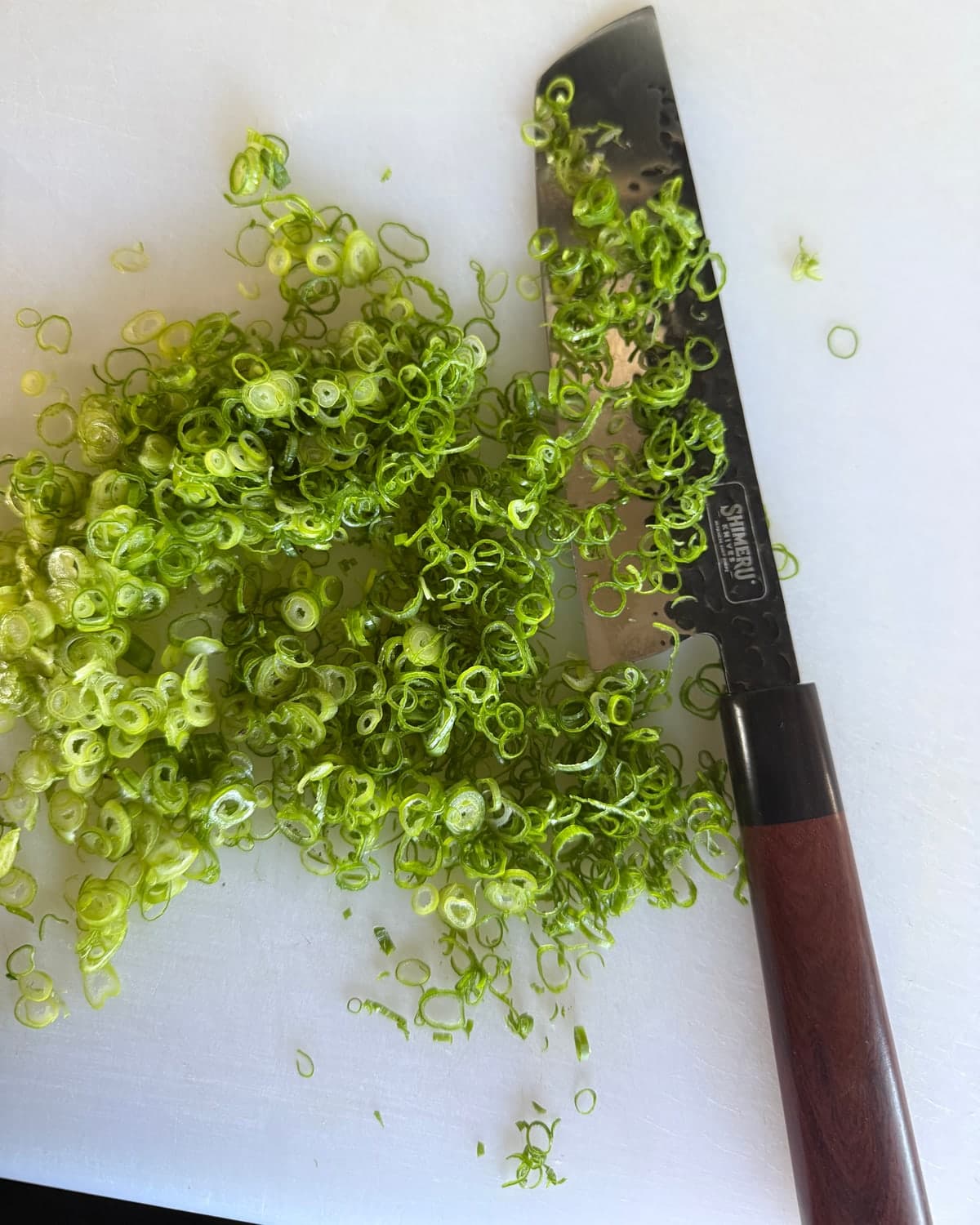
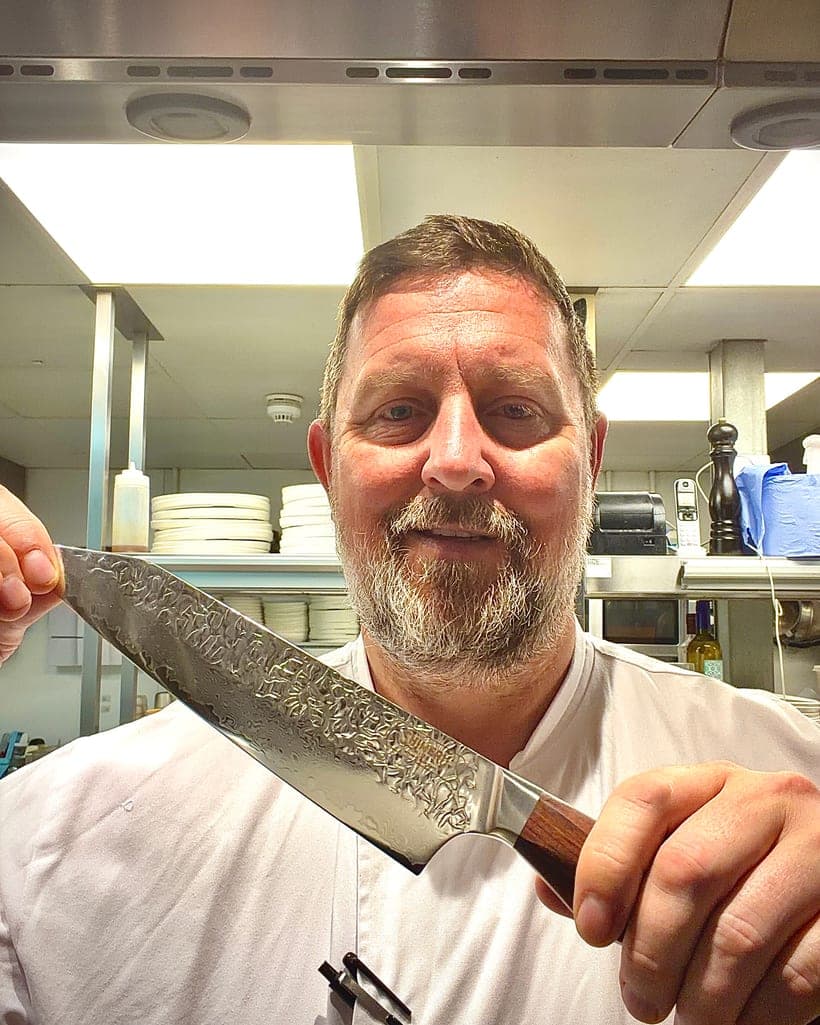
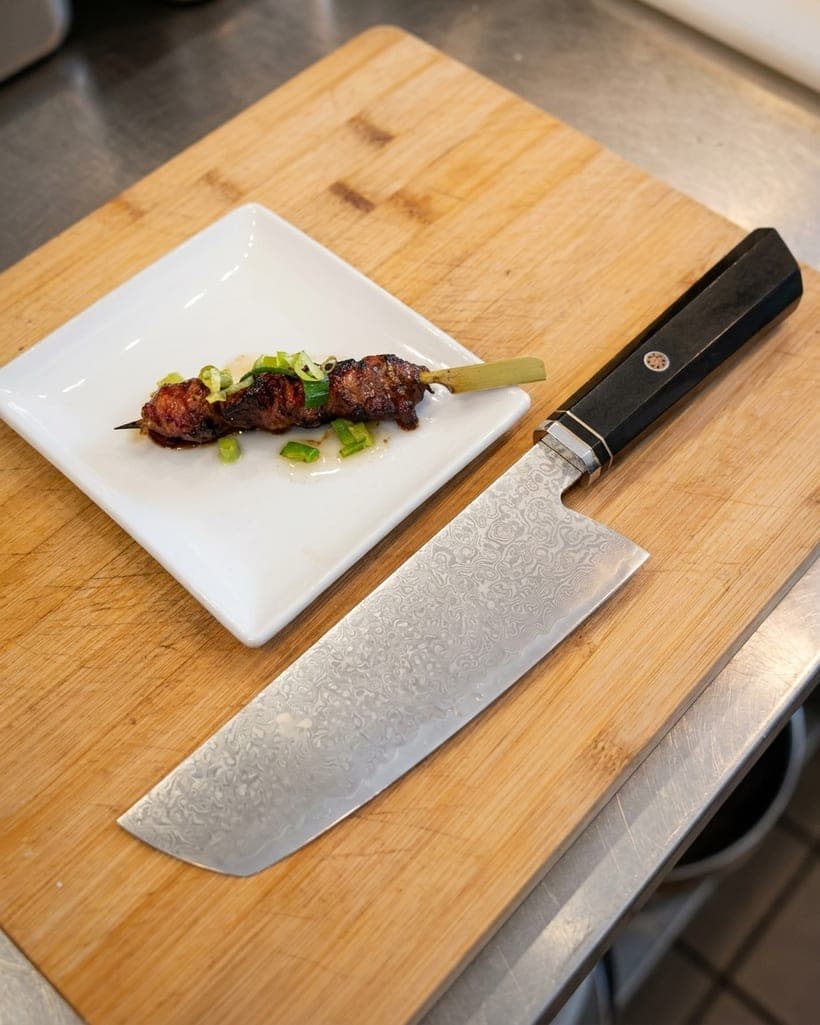
Cladding can protect a harder core steel and improve toughness. A hammered finish, often called tsuchime, can slightly reduce food sticking, though the effect varies by blade and ingredient. Damascus layering creates a rippled pattern that many people associate with Japanese craftsmanship. Sometimes it contributes to cladding structure. Sometimes it is mostly visual. Both are valid, as long as the underlying knife is made well.
A polished finish can help with food release and corrosion resistance. A more textured finish may lean into hand-made character. Neither automatically means better performance. The blade's grind and heat treatment still matter more than surface appearance.
This is a useful point for first-time buyers. A beautiful pattern does not guarantee a better knife. The smartest way to judge quality is to look past the finish and ask what steel is used, how hard it is, how the edge is ground, and whether the knife is designed for real kitchen work.
Handle fitting, balance, and the final feel
The blade gets most of the attention, but the handle decides a lot about comfort.
Traditional Japanese wa handles are usually lighter and often made from wood with a hidden tang. That lighter construction can shift the balance forward toward the blade, which many cooks find agile and precise. Western-style handles are often heavier, with full tang construction and scales riveted to the sides. They can feel more familiar if you are upgrading from a standard European chef's knife.
Neither style is universally better. A lighter handle can make repetitive prep feel easier and less fatiguing. A heavier handle can feel more planted and reassuring. What matters is that the knife feels balanced, secure, and natural in your grip.
Once the handle is fitted, the knife is sharpened, inspected, and finished. On better knives, this last stage is not rushed. Small corrections are made by hand. The choil and spine may be eased for comfort. The edge is refined so the knife is ready to perform out of the box.
Why Japanese knives cut differently
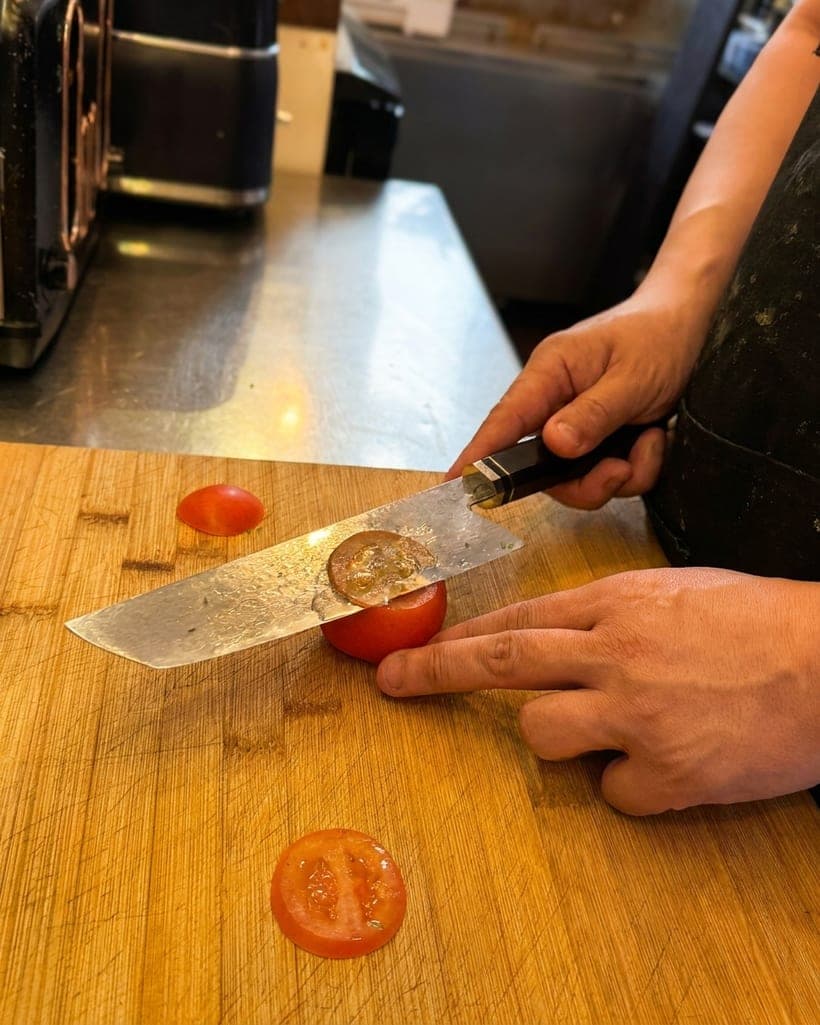
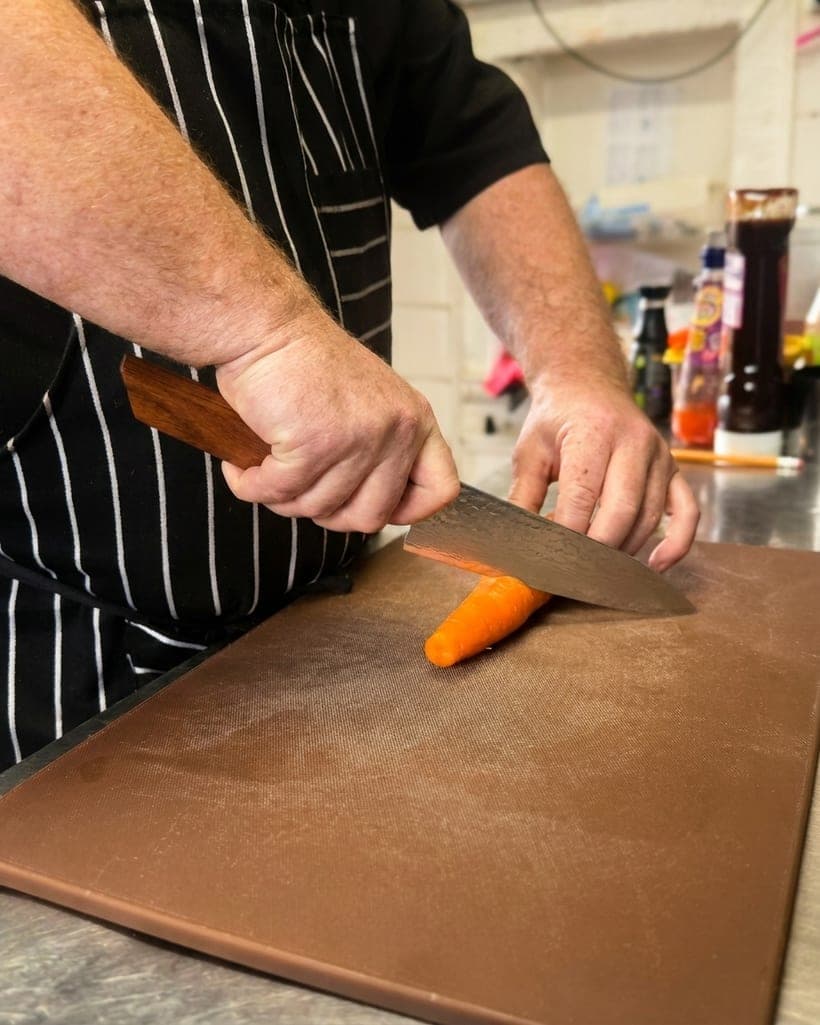
When people switch to a Japanese chef knife, the difference usually feels immediate. Carrots crack less. Herbs bruise less. Slices look cleaner. Prep feels quieter.
That is not because Japanese knives are magical. It is because the making process prioritises a hard steel core, careful heat treatment, thin geometry, and balanced construction. Each step is aimed at reducing resistance and improving control.
For home cooks, that translates into everyday benefits. Less force needed. Better consistency. A sharper edge that lasts longer between sharpenings. A knife that feels like an upgrade every time you reach for it.
At Shimeru Knives, that idea matters. Japanese craftsmanship should feel exciting, not intimidating. You do not need to become a collector or learn every steel name by heart to appreciate what makes these knives special. You just need to feel the difference on the board.
What the process means when you are choosing one
Knowing how Japanese chef knives are made helps you shop more intelligently. It keeps you from overvaluing flashy finishes and undervaluing the details that truly affect performance.
If you want low maintenance, a stainless Japanese steel with strong heat treatment is usually the best fit. If you love sharpening and do not mind extra care, carbon steel can be deeply rewarding. If you want one do-it-all shape, start with a Gyuto or Santoku. If vegetables are your focus, a Nakiri may feel like a revelation.
The best knife is not the most technical one. It is the one whose steel, shape, and balance match the way you actually cook. Once you understand how the knife is made, that choice gets much easier.
A well-made Japanese chef knife is not just a sharper blade. It is a better cooking experience, built one decision at a time.