



How to Sharpen Japanese Kitchen Knives
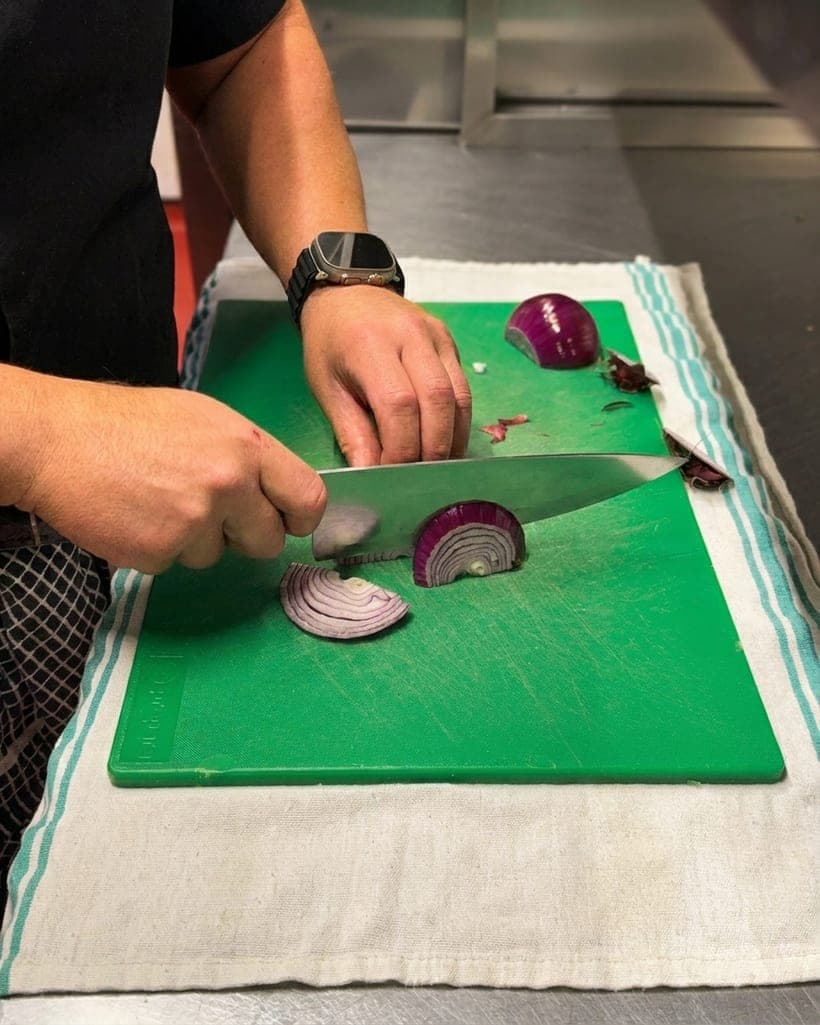
A Japanese knife tells on you quickly. When the edge is right, onions fall apart in clean slices, herbs stay bright instead of bruised, and prep feels light and precise. When it is dull, even a beautiful blade starts dragging, slipping, and crushing food. If you are learning how to sharpen Japanese kitchen knives, the good news is that you do not need professional training or a workshop full of tools. You need the right stone, a steady method, and a little patience.
Japanese kitchen knives reward good sharpening because they are designed for it. Many are made from harder steel than standard Western knives, which helps them hold a finer edge for longer. That also means the sharpening approach should be more deliberate. A pull-through sharpener might feel convenient, but it can chip a hard, thin edge or remove too much metal too quickly. For most home cooks, a whetstone is the best match - simple, accurate, and gentle on the blade.
Why Japanese knives need a different approach
The biggest difference is edge geometry. Japanese-style knives are often sharpened at a narrower angle than typical Western chef knives. That thinner edge is part of what makes a Gyuto, Santoku, or Nakiri feel so effortless on the board. It glides rather than wedges.
That performance comes with a trade-off. A finer edge is not as forgiving of rough sharpening, twisting cuts, or hard surfaces like glass or granite. If you sharpen at too steep an angle, the knife may feel durable but lose the precision that made you buy it in the first place. If you sharpen too low, the edge may become fragile. The goal is not simply to make the knife sharp. It is to preserve the character of the knife.
For most double-bevel Japanese kitchen knives, an angle around 12 to 15 degrees per side is a good target. You do not need to measure it with scientific precision, but consistency matters more than chasing a perfect number.
What you need to sharpen Japanese kitchen knives
You can keep this fairly simple. A medium grit whetstone, usually around 1000 grit, is the core tool. If your knife is quite dull or has minor edge damage, a coarser stone in the 400 to 600 range helps reset the edge faster. If you want a more polished finish, a finer stone in the 3000 to 6000 range refines it beautifully.
A stone holder or even a damp kitchen towel under the stone makes a real difference because stability is part of control. You will also want water, a towel, and enough counter space to work comfortably. That is it.
There is no need to overcomplicate this with gadgets. In fact, many home cooks get better results by learning one reliable stone and one reliable technique rather than chasing shortcuts.
How to sharpen Japanese kitchen knives step by step
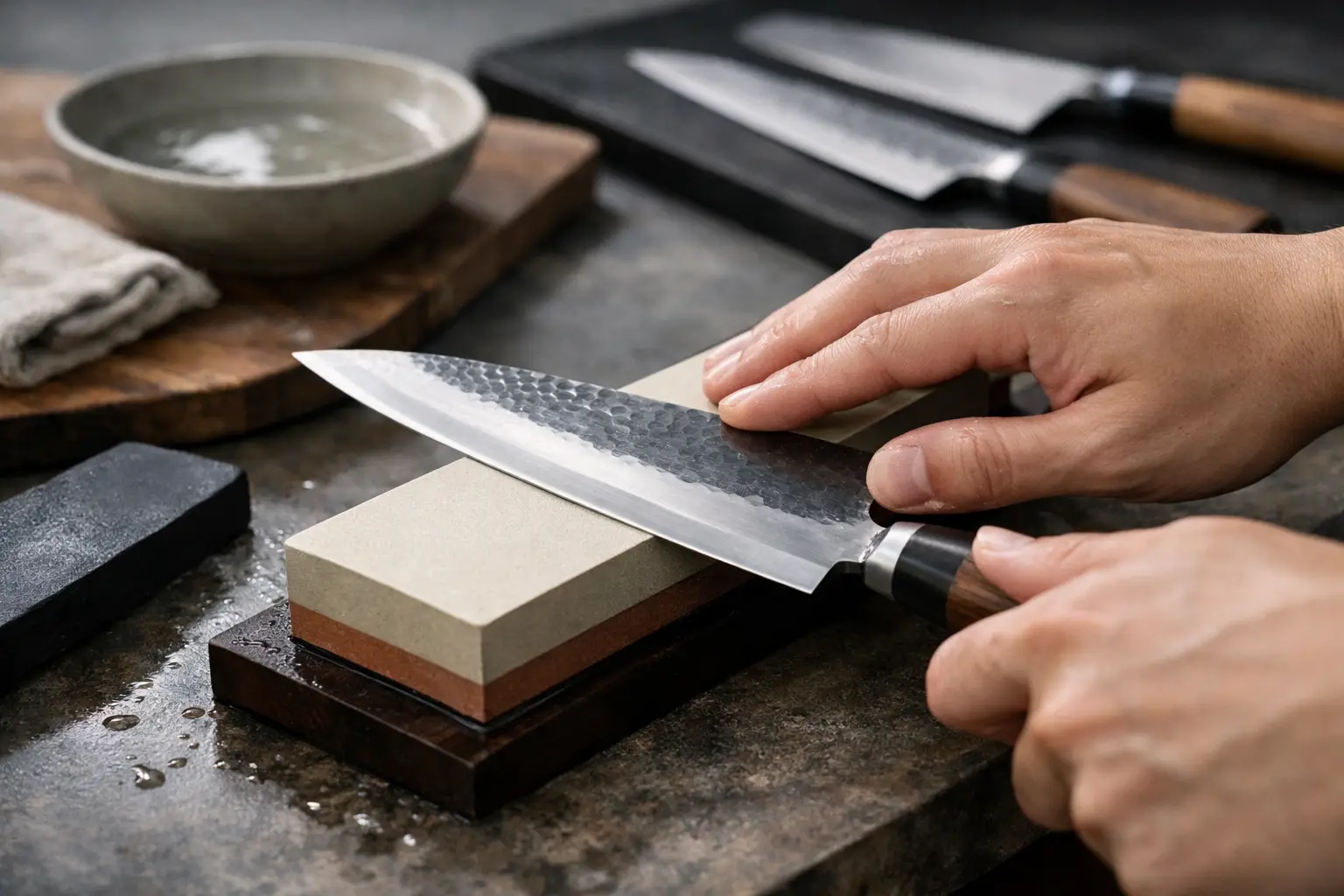
Start by soaking your whetstone if it is a soaking stone. Some stones only need a splash of water, so check the stone type first. Once the surface is wet and secure on the counter, place the knife on the stone at your chosen angle.
A helpful way to think about the motion is edge-leading, with the edge moving into the stone as if it were trying to shave a thin layer from the surface. Use light, controlled pressure and move in smooth passes, covering the full section of the edge. You can work from heel to tip in sections or in one flowing motion. For beginners, sections are often easier because they make it simpler to keep the angle steady.
After several passes on the first side, feel gently for a burr on the opposite side of the edge. The burr is a tiny fold of metal, and it tells you that you have sharpened all the way to the apex. Once you can feel that burr from heel to tip, switch sides and repeat.
This is the point where many people rush. Do not. Uneven sharpening usually comes from impatience, especially near the tip. The tip curves upward, so you need to lift your hand slightly to follow the shape of the edge. If you keep the knife flat through the curve, the tip often stays dull.
When both sides have formed a burr, use lighter alternating strokes to reduce it. If you are moving to a finer stone, now is the time. The finer stone is less about major metal removal and more about refinement. It cleans up the scratch pattern and leaves a smoother, keener edge.
Finish by rinsing and drying the knife completely. Dry the stone and let it air dry thoroughly before storing it.
How much pressure should you use?
Less than most people think. Start with moderate pressure to establish the edge, then reduce it as the knife gets sharper. Your final passes should feel almost delicate. Heavy pressure at the end can fold the edge over and waste the progress you just made.
How do you know when the knife is sharp?
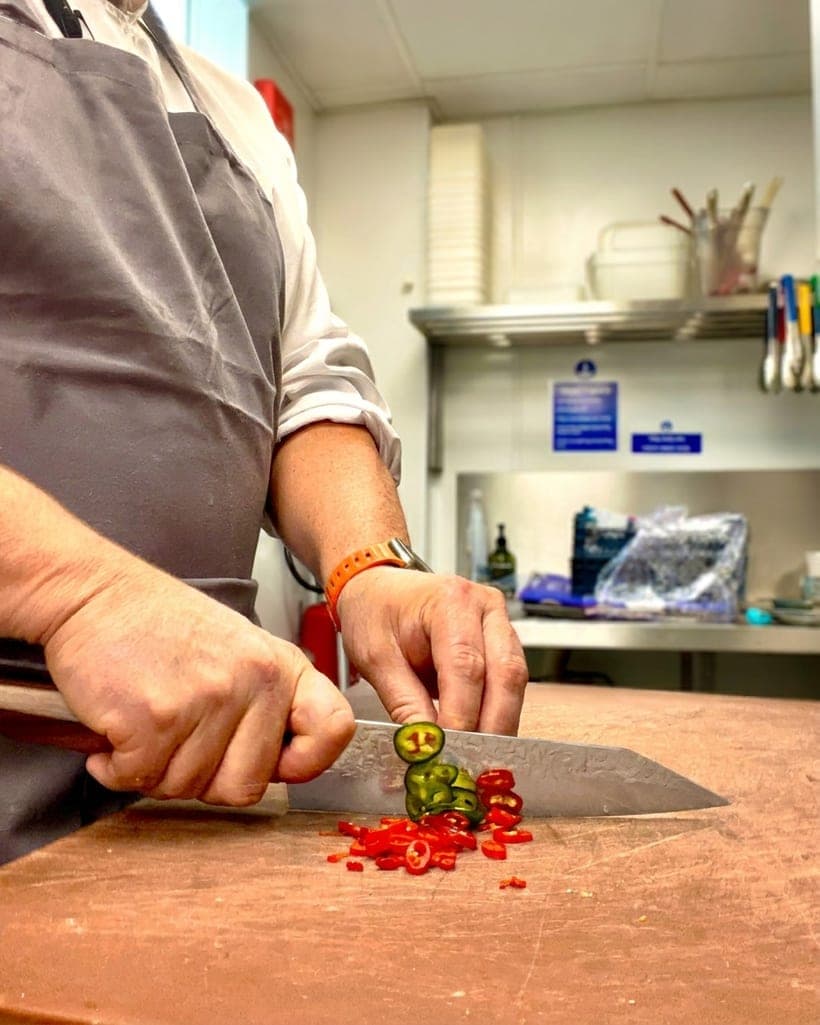
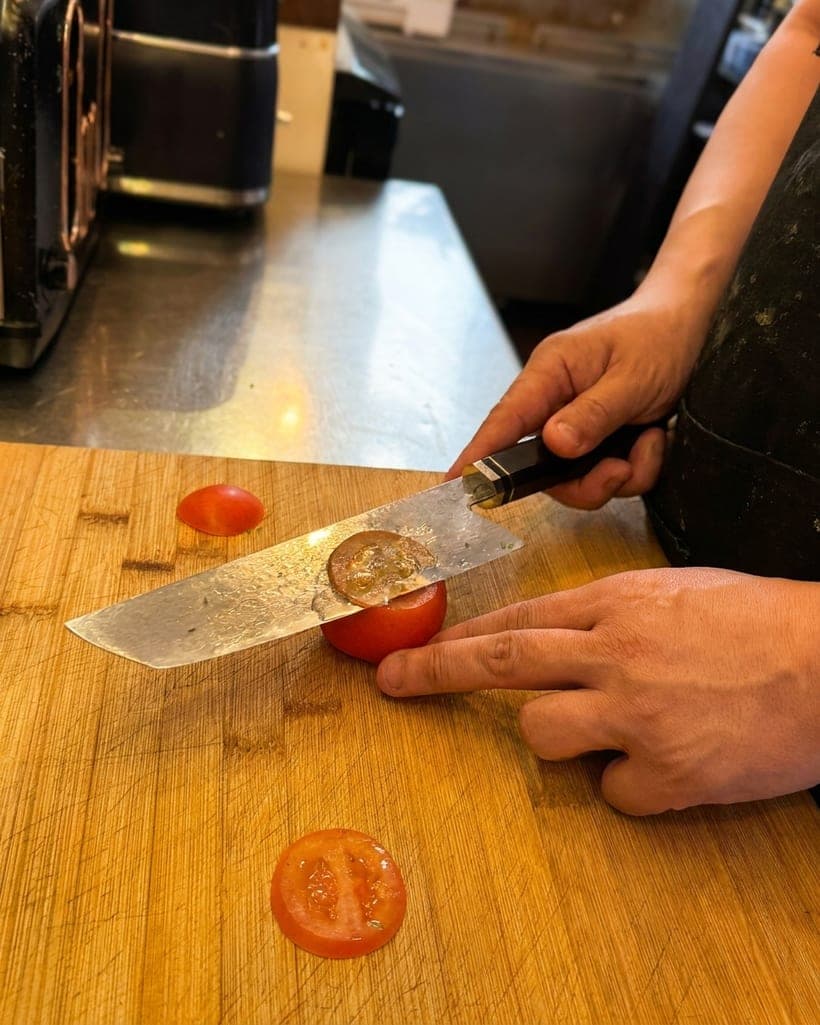
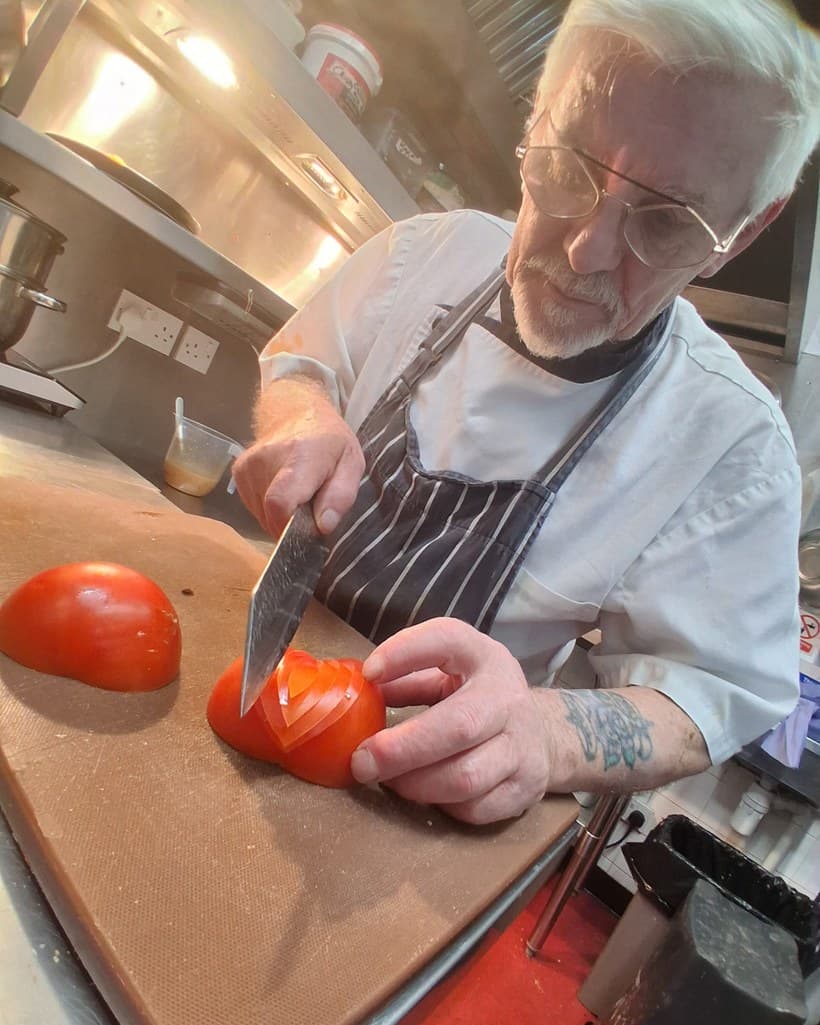
You do not need dramatic tests. A sharp kitchen knife should slice printer paper cleanly, cut a tomato skin without slipping, and move through herbs without crushing them. For everyday cooking, that is the standard that matters.
Common mistakes when sharpening Japanese knives
The first is using the wrong tool. Pull-through sharpeners are convenient, but they are a poor fit for many Japanese blades, especially harder steels and thinner edges. Electric sharpeners can be even more aggressive.
The second is inconsistent angle control. If the angle changes every stroke, you will struggle to form a clean apex. This is why slow sharpening often beats fast sharpening.
The third is staying too long on a fine stone when the knife is actually dull. Fine stones refine. They do not rescue a tired edge efficiently. If your knife is sliding on onions or struggling with paper, begin with a coarser grit and then work upward.
Another common mistake is treating honing and sharpening as the same thing. A honing rod realigns an edge. Sharpening removes metal to create a new edge. And for many Japanese knives, traditional grooved steel honing rods are too harsh. If you use a rod at all, a smooth ceramic rod is the safer option, and even then, use a light touch.
How often should you sharpen?
It depends on how often you cook, what you cut, your board surface, and the steel itself. A home cook using a Japanese chef knife a few times a week may only need full sharpening every few months. Someone cooking daily may want light maintenance more often.
The better question is not calendar-based. It is performance-based. If the knife starts slipping on tomato skin, crushing scallions, or needing extra pressure through onions, sharpen it. Waiting until the knife is completely dull only makes the job harder.
A quick touch-up on a medium or fine stone can keep the edge in a much better place than occasional heavy sharpening sessions.
Whetstone grit guide for home cooks
If you only buy one stone, make it a 1000 grit. It is the most useful all-around choice for regular maintenance.
If you want a small but effective setup, a two-stone approach works well. Use a 400 to 600 grit stone for dull knives or minor chips, then a 1000 to 3000 grit stone for the working edge. If you enjoy a more polished finish and cleaner push cuts, add a 4000 to 6000 grit stone.
There is no prize for the highest grit. Ultra-fine polishing stones can feel satisfying, but for most home kitchens, a well-sharpened 1000 or 3000 grit edge is already excellent.
Caring for the edge after sharpening
Good sharpening lasts longer when the rest of your habits support it. Use a wood or soft plastic cutting board. Hand wash and dry the knife right away. Store it in a saya, blade guard, or knife block where the edge is protected. Avoid scraping chopped food off the board with the edge itself - turn the knife over and use the spine.
These details sound small, but they are exactly what preserve the clean, refined edge that makes Japanese knives feel different in daily use.
For home cooks stepping up from heavier Western knives, this is part of the appeal. A Japanese blade is not high-maintenance in a fussy way. It simply responds well to proper care. Precision in, precision out.
When to sharpen yourself and when to get help
Most home cooks can absolutely learn this. If your knife is simply dull, a whetstone and a calm half hour are enough. But if the blade has chips, a bent tip, serious unevenness, or if it is a single-bevel knife, professional sharpening may be the better move.
That is not a failure. It is judgment. Some jobs call for routine maintenance, others for repair. Knowing the difference protects the knife.
If you are building a better kitchen, sharpening is worth learning because it changes how the knife feels every single day. A good Japanese knife is made to hold an edge, but also to be renewed. That is part of the craftsmanship. Keep the process simple, stay consistent, and your knife will keep earning its place on the board.