

Top Bread Knife for Sourdough
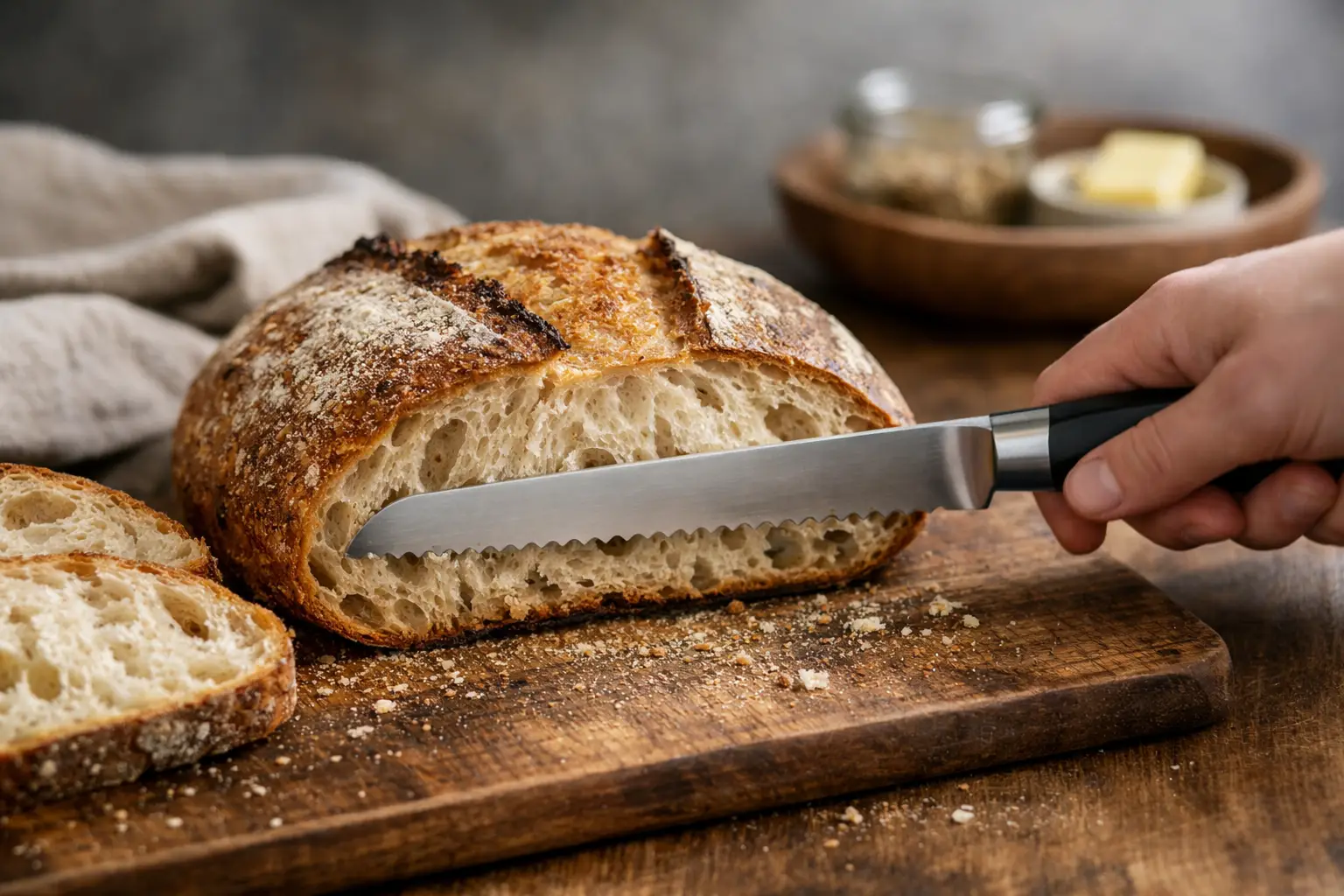
The moment you slice into a well-made sourdough loaf, your knife reveals its true character. If the crust shatters, the crumb compresses, and the slices come out uneven, the problem is rarely the bread itself. It is the knife. Choosing the best bread knife for sourdough comes down to one thing: controlled aggression. You need enough bite to break through a thick, crackling crust, but not so much that the blade tears the loaf apart.
Sourdough asks more of a bread knife than sandwich bread or soft brioche. The crust is often deeply caramelised and rigid. The interior can be airy, elastic, and delicate. A weak serration pattern will skate across the surface. A thick, clumsy blade will crush the crumb before it cuts. And a knife that feels heavy in the hand can make a simple slice feel like work.
What makes the best bread knife for sourdough?
The best bread knife for sourdough has a long blade, sharp serrations, good balance, and enough stiffness to track straight through the loaf. That sounds simple, but each of those details changes how the knife performs.
Blade length matters first. For most round boules and larger batards, a blade around 9 to 10 inches gives you the reach to slice in one smooth motion. Shorter blades can work on small loaves, but they tend to force a choppy sawing action. That creates more crumbs, more tearing, and less control. If you regularly bake large artisan loaves, a longer blade is almost always the better choice.
Serration style matters just as much. Deep, aggressive teeth can make quick work of hard crusts, but they can also leave rough, ragged edges on softer interiors. Finer serrations tend to cut more neatly, though they may need a bit more pressure on especially dark crusts. For sourdough, the sweet spot is usually a well-spaced serration pattern that grabs the crust early and keeps moving without shredding the crumb.
Thickness is the detail many buyers miss. A bread knife should not feel flimsy, but it should be slim enough to pass through the loaf cleanly. If the blade is too thick behind the serrations, it wedges the bread apart instead of slicing it. That is where better craftsmanship shows up. A well-made bread knife feels precise rather than brute-force.
Why Japanese-style design suits sourdough
Home cooks often think of Japanese knives in terms of chef knives, santokus, or nakiris. But the same qualities that make Japanese steel attractive in those formats also matter in a bread knife. Precision. Balance. Craft.
A well-designed Japanese-style bread knife tends to feel lighter and more agile than many bulky Western alternatives. That lighter weight is not about fragility. It is about control. When you are cutting a crusty boule, control is what keeps the blade tracking straight instead of twisting through the loaf.
Better balance also reduces effort over time. If you slice bread every morning, prep toast for a family, or bake on weekends, that difference becomes obvious quickly. The knife feels like a tool you guide, not one you wrestle with.
Steel quality plays a quieter role, but it still matters. Serrated knives are sharpened differently from straight-edge blades, and most people will not sharpen them often at home. That makes edge retention especially valuable. A bread knife that keeps its bite longer stays pleasant to use longer. You should not have to lean into the crust just to get started.
The features worth paying for
If you are comparing options, focus less on marketing language and more on how the knife behaves in real use.
A pointed serration pattern usually gives the strongest initial grip on hard crusts. That is useful for rustic sourdough with a dark bake or a flour-dusted exterior. A scalloped pattern can produce cleaner slices on softer breads and cakes, but on very firm crusts it may feel slightly less assertive. Neither style is automatically better. It depends on what you slice most.
Handle shape is another practical factor. A bread knife gets used in a longer, more repetitive cutting motion than a chef knife. You want a handle that feels secure without forcing your grip into one position. If your hands are smaller, a slim, well-contoured handle often feels easier to control. If you prefer a more substantial grip, a slightly fuller handle may feel more planted.
Blade flex is worth checking too. Some flexibility is normal, but too much can make it hard to cut even slices, especially on tall boules. A sourdough loaf is not just crusty. It is often uneven in shape, which means the knife has to stay stable as it moves through changing resistance.
Then there is finish. A polished, well-ground blade is not just about appearance. Smoother blade surfaces can reduce drag slightly and make the knife easier to clean. That matters more than you might think when crumbs and sticky interiors are involved.
What to avoid when choosing a sourdough bread knife
The cheapest bread knives often seem fine at first because serrations can mask mediocre steel and rough construction. But the difference shows up in the cut. The blade snags. The crust fractures. The slice starts straight and ends crooked.
Very short bread knives are one common mistake. They can feel manageable in the drawer, but they turn slicing into a stop-start motion. Another issue is excess weight. Heavier is not better here. With sourdough, too much weight can make the knife feel blunt even when it is not, because the blade pushes down instead of moving forward cleanly.
You should also be cautious of ultra-cheap serrated edges that are overly sharp at the tips but poorly ground between them. They feel dramatic for a few uses, then lose refinement fast. The result is a knife that tears more than it cuts.
Best bread knife for sourdough by use case
If you buy sourdough from a bakery once a week, almost any decent 9-inch serrated knife will get the job done. But if bread is part of your routine, it is worth choosing more carefully.
For frequent bakers, longer blades with strong but controlled serrations are usually the best fit. You are dealing with varied crust development, flour-heavy exteriors, and loaves that may still be slightly tacky inside. A stable, sharp blade makes all of that easier.
For everyday home cooks who want one bread knife for everything, versatility matters more. In that case, look for a knife that can handle sourdough without being too aggressive for sandwich loaves, tomatoes, or pastries. This is where balance becomes more important than maximum bite.
For gift buyers, the best choice is often the knife that feels premium immediately. Clean fit and finish, comfortable grip, and a blade that cuts neatly from the first slice all matter more than technical spec sheets. A great bread knife feels like an upgrade the moment it touches the cutting board.
How to tell if your current bread knife is the problem
A good sourdough loaf should not require force. If you find yourself pressing hard to break the crust, if the crumb compresses before the blade gets through it, or if each slice leaves a trail of torn edges and loose shards, your knife is likely underperforming.
You can also listen to the cut. A clean bread knife has a steady, crisp sawing sound. A dull or poorly designed one chatters, catches, and feels inconsistent from front to back. That inconsistency is usually a sign of worn serrations, poor balance, or a blade profile that is simply not suited to artisan bread.
Care matters, even for a bread knife
Because bread knives are serrated, many people treat them as maintenance-free. They are not. They just ask for different care.
Hand wash the knife and dry it right away. Do not toss it into a utensil drawer where the serrations can knock into other tools. Use a guard or dedicated slot if you have one. And while bread knives do stay useful for a long time, they are not immortal. If the knife starts crushing more than slicing, it may need professional sharpening or replacement.
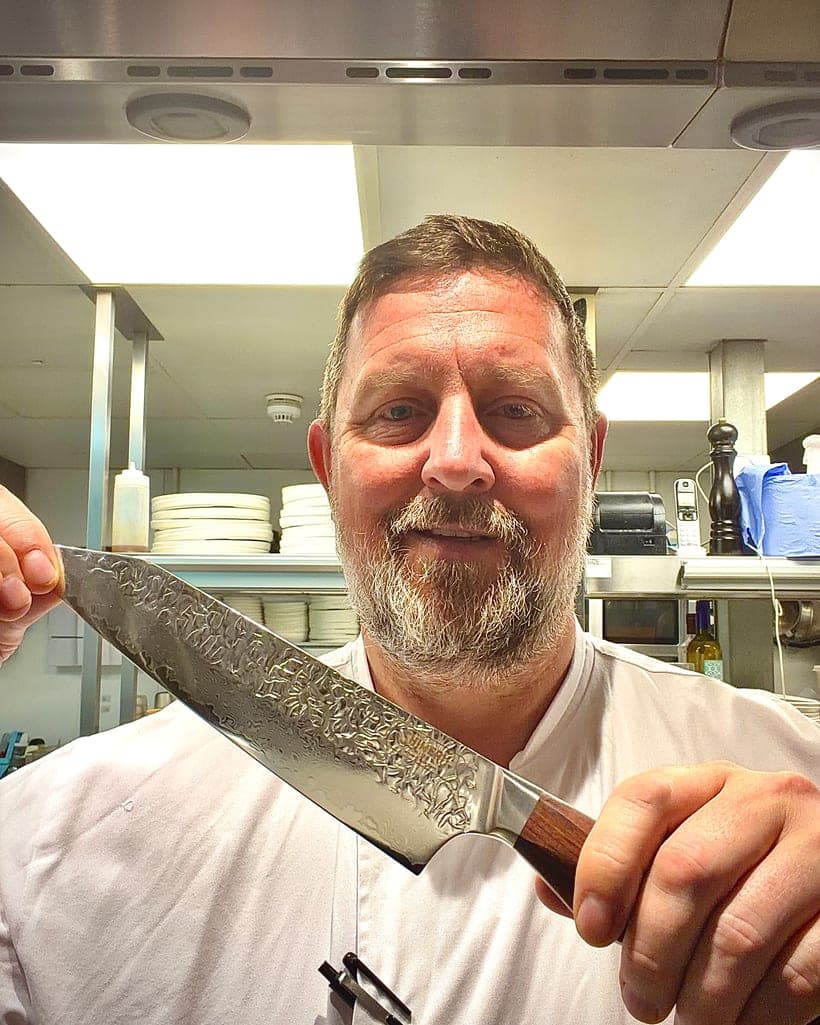
If you are building a better kitchen, this is one of those tools that quietly earns its keep. A premium bread knife from a brand like Shimeru Knives is not about adding another blade for the sake of it. It is about making one of the most satisfying parts of cooking feel effortless - the clean crackle of crust, the intact open crumb, the slice you actually want to serve.