Flat vs. Curved: The Subtle Art of Gyuto Knife Edge Geometry
There is a moment in every kitchen—a hush before the first slice, whether a chef’s knife hovers over an onion or a tomato—that signals the start of transformation. In Japanese culinary tradition, this moment arrives with a particular subtlety, and it is perhaps with the gyuto knife that the alchemy of food and blade is most clearly revealed. For professional chefs and home cooks alike, the gyuto is a symbol of precision and adaptability, yet beneath its familiar silhouette lies a nuanced world of design choices. Among these, the shape of the blade’s edge—flat or curved—represents a quiet but influential battleground, shaping not only how food is cut, but how cooks interact with the tools of their craft.
The gyuto, often called the “chef’s knife” of Japan, originated as a response to the needs of Western cuisine but has since evolved into an indispensable all-rounder for Japanese and international chefs. Its very name, translating roughly to “beef sword,” hints at an origin rooted in versatility: slicing, dicing, chopping, and mincing not only meats but also vegetables and fish. Over the decades, as culinary culture globalized, the gyuto’s form took on new variations, and nowhere is this more apparent than in the geometry of its edge.
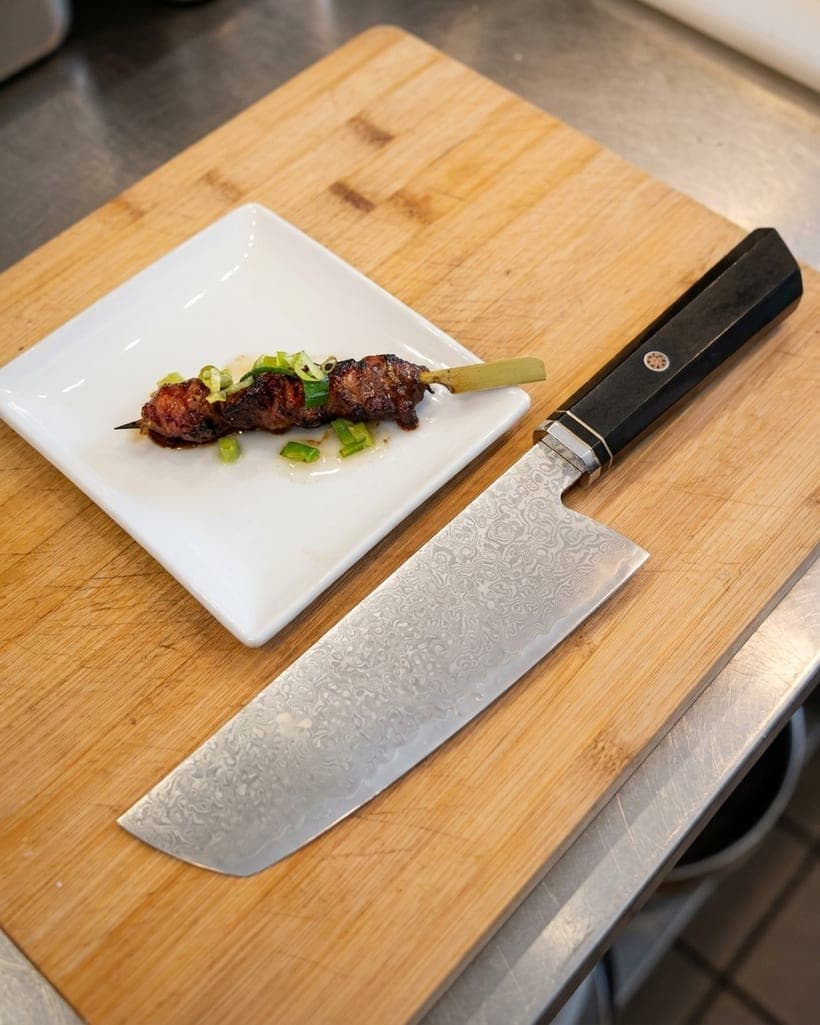
At first glance, the debate appears simple: flat versus curved. But beneath this binary lies a spectrum of possibilities and a web of implications. Flat edges—sometimes referred to as “chopping profiles”—feature a straighter cutting edge from heel to mid-blade, only slightly rising toward the tip. Curved edges, on the other hand, boast a pronounced belly, gently arcing from the heel along the length of the blade.
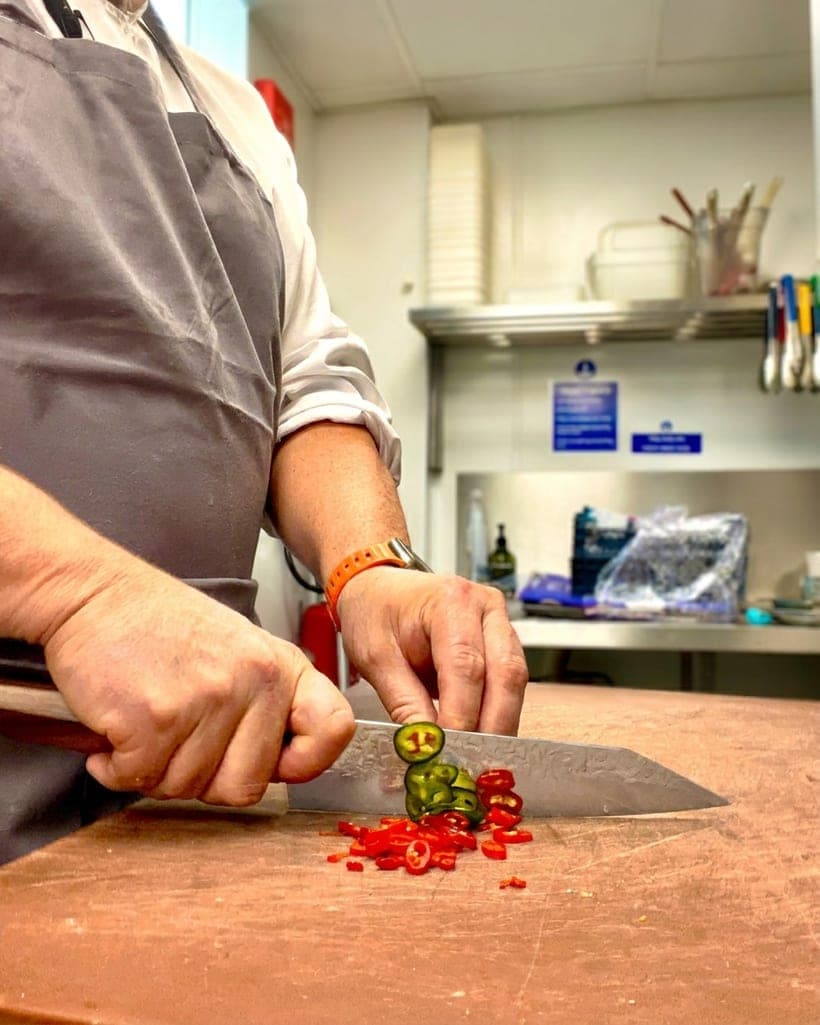
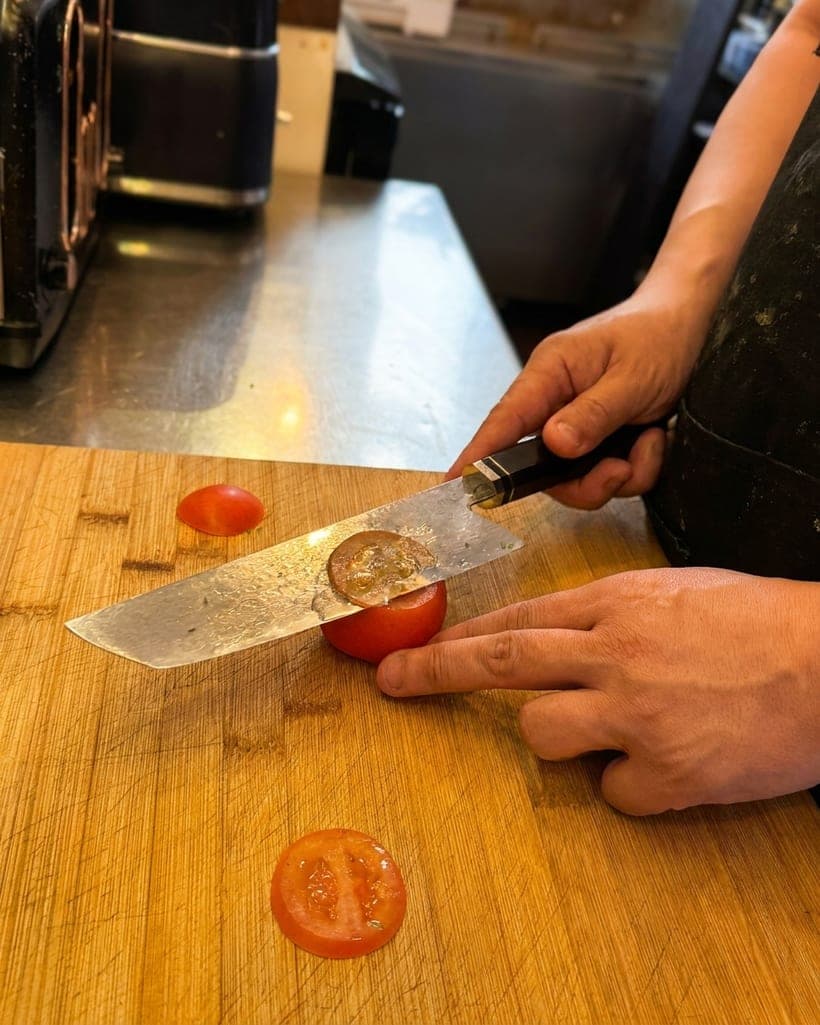
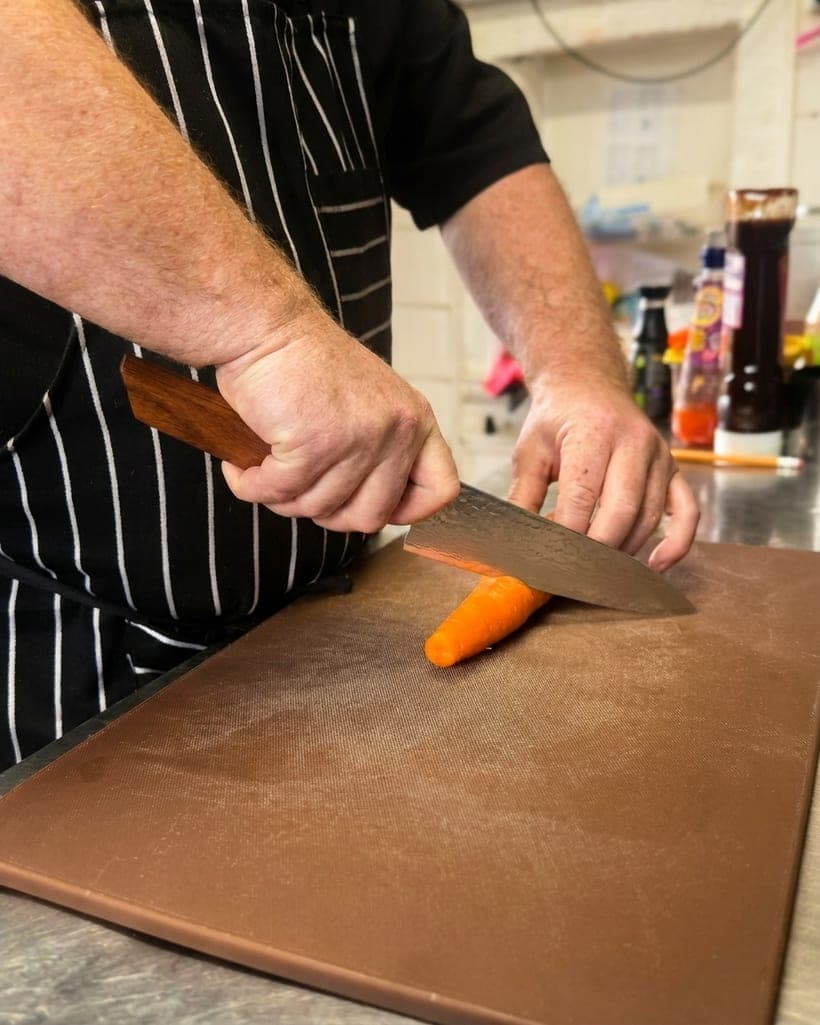
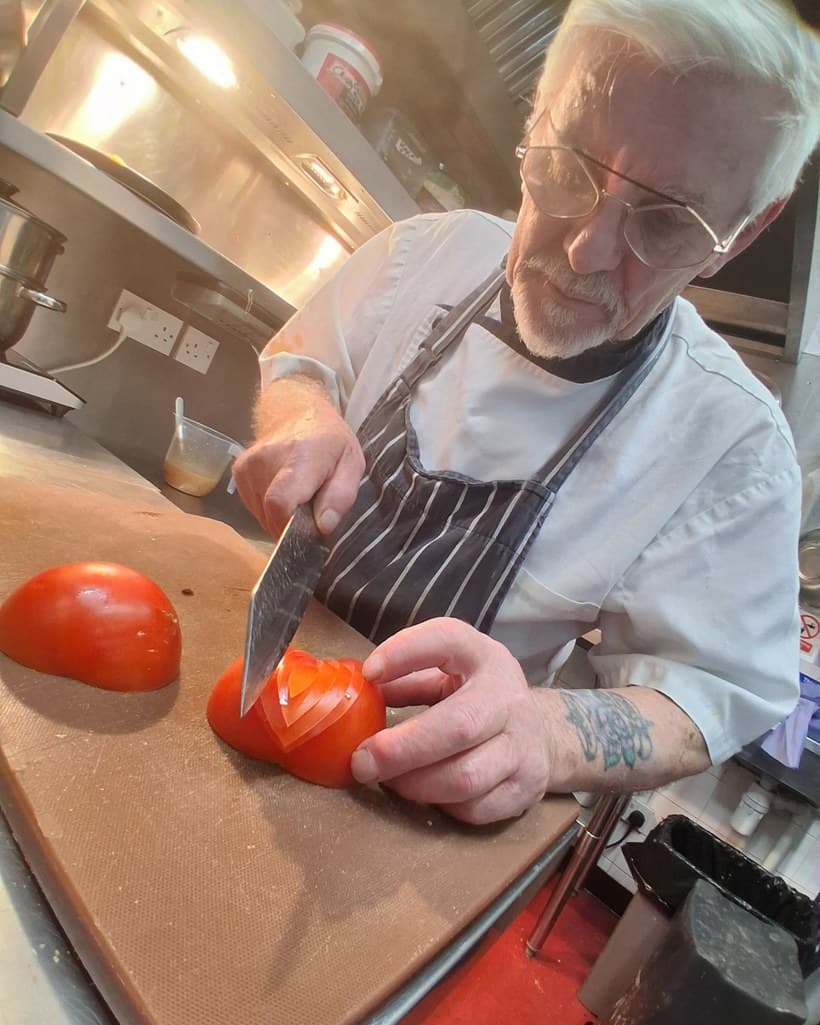
The differences may seem modest, almost pedantic, until one begins to slice. Here, the true impact is felt. Flat-edge gyuto knives favor techniques common in Japanese cookery, particularly the up-and-down chopping motion. Dicing a carrot or mincing herbs becomes a process of precision, as the entire length of the blade makes uniform contact with the cutting board. For chefs who value clean, straight cuts—whether julienning daikon or cubing tofu—the flat edge ensures accuracy and efficiency.
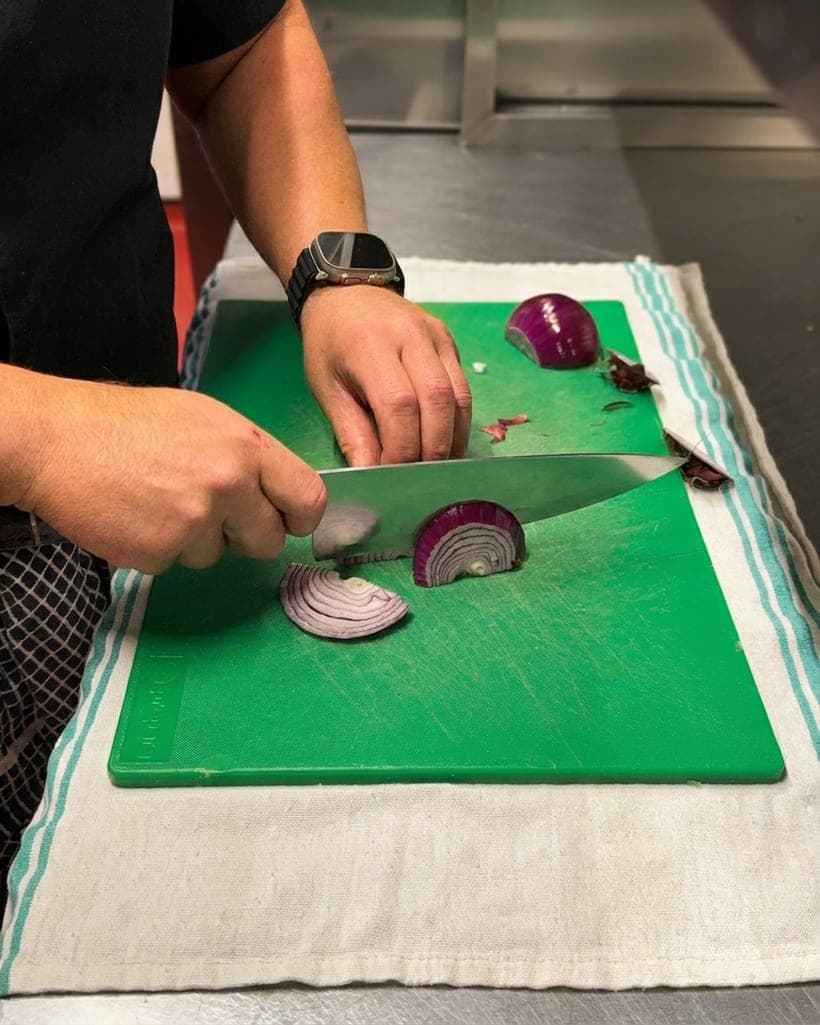
Curved-edge gyuto knives, inspired more by their European counterparts, cater to the rocking-chop technique found in French and Western cuisines. When swiftly mincing garlic or onions, the knife’s tip remains anchored to the board while the remainder sweeps through produce in a rhythmic, seesawing motion. This arc enables faster repetition and reduces wrist strain over extended prep sessions. The curved belly of the blade excels with rounded or irregular ingredients as well, adapting seamlessly to the undulations of an eggplant or bell pepper.
Choosing between these edge profiles is not merely a matter of tradition or aesthetics. It is a statement about workflow and priorities at the cutting board. Modern kitchens sit at the crossroads of globalization, where Japanese sushi and French mirepoix might appear on the same menu. Increasingly, cooks must consider which knife geometry aligns with their repertoire, and more importantly, with their own technique.
Yet for all its import, edge geometry presents its own spectrum of challenges, both technical and practical. For one, there is the matter of sharpening. The flat profile’s even contact with the board simplifies honing and sharpening by hand, but the straightness can sometimes lead to “dead zones”—sections of the edge that rarely make contact if the user’s technique leans toward rocking. Curved profiles, alternatively, can provide a consistent cutting edge for the rock-chop method, but sharpening the arc requires greater skill to maintain the knife’s geometry over time.
There are also ergonomic factors to weigh. In a high-volume kitchen, strain injuries are not theoretical. The motion required by a curved-edge knife, while fluid, can tax the forearm and wrist when overused, particularly if the cook unconsciously adapts a less-than-ideal grip. Flat-edge knives, by inviting an up-and-down motion, generate more impact, potentially increasing fatigue over long prep periods.
The rise in popularity of hybrid or “semi-curved” gyuto blades signals a broader trend in culinary tools: the search for adaptable solutions that traverse cultural and technical boundaries. Manufacturers now experiment with subtler bellies or partial curves, aiming to deliver the best of both worlds—a blade that chops efficiently yet rocks when asked. For home cooks, this raises the stakes when investing in a gyuto. The sheer choice available can overwhelm, and the differences that matter are often imperceptible on first inspection.
For the modern cook, then, what are the lessons hiding in the curve and the line? Firstly, the knife is not just a tool, but an extension of the cook’s intention and technique. Understanding one’s own style—whether one moves quickly through prep with a rocking motion, or cherishes the precision of an up-and-down chop—should precede the selection of a blade shape. Secondly, the evolution of the gyuto knife illustrates the duality of tradition and innovation in kitchen tools. The blending of Japanese and Western sensibilities in a single object mirrors the global pantry found in contemporary homes and restaurants alike. There is both risk and reward in choosing a knife shape: defaulting to a fashionable hybrid or a traditional profile shapes not only what you cut, but how you think about cooking itself.
What persists, regardless of edge geometry, is the singular joy of a sharp knife meeting fresh ingredients. It is an encounter that connects centuries of tradition with the meal at hand. As long as there are cooks seeking mastery, the dialogue between blade and board will continue—a conversation traced in every clean cut, whether carried out by the straight authority of the flat edge or the graceful arc of the curved.